75 Years of the Little Traverse Bay Humane Society
Behind the scenes at the Harbor Springs shelter
At the Little Traverse Bay Humane Society (LTBHS) in Harbor Springs, their answer, whenever possible, is yes: yes to adoption, yes to sustainable solutions, and most importantly, yes to the dogs and cats in need throughout northern Michigan.
“We use our values to determine solutions every day here at the shelter,” says senior director of advancement Jessica Mendezona. “If we can find solutions, or if we can make something happen for pets and for people, that’s what we try to do.”
With 75 years of experience under their paws as of 2026, the organization is the true cat’s meow of serving pets in need and the people who love them.
Founded in 1951, the Little Traverse Bay Humane Society is a nonprofit, no-kill animal welfare organization based in Emmet County (in fact, it’s the only one), whose Harbor Springs-based shelter serves hundreds of companion pets, their humans, and the occasional rodent or wildlife, every year.
Other key initiatives in the LTBHS’s scope include a community pet pantry, which offers free public access to essential pet food and supplies; emergency vet care assistance; safe, temporary housing for pets through the Buddy & Blossom Guardian Fund; and low-cost spay and neuter procedures to help curb overpopulation rates, all of which are facilitated by a small-but-mighty staff and volunteer team.
Per Mendezona, the shelter also incorporates a few for-profit subsidiaries—notably, a full-service vet clinic, as well as grooming, boarding, and training services—all of which generate revenue to further support the shelter and its mission. New this year as of January, they’ve also undertaken Emmet County’s stray animal services contract.
Saving 1,000 Animals a Year
In northern Michigan, however, need for those services often outpaces capacity.
Per the LTBHS’s most recent annual report, the shelter saw an annual intake of 1,008 animals in 2025, a woofing 842 of which successfully found new homes. Similarly, 2026 intake is also expected to fall around 1,000. But those numbers don’t always provide an accurate snapshot of animals that still need homes.
For starters, the LTBHS, like other shelters, is limited by physical capacity, which, at the Harbor Springs facility, ranges from a maximum of about 80 to 100 four-legged occupants at a time. Though distribution generally accounts for a 50-50 split between cats and dogs, available cages and kennels can fluctuate based on various factors: individual animal needs (like injuries or other medical issues), temperament, and case-specific space requirements for sibling sets or moms with litters all play into how many new pets the shelter can accommodate and when.
In this regard, local foster homes, which collectively housed 282 animals in 2025, offer a critical extension of the shelter’s capacity for care, especially for unforeseen emergencies, like the now infamous “kitten-palooza” earlier this summer, when the LTBHS took in 69 kittens from the Gladwin County Animal Shelter.
“We were able to help them out, but we’d love for our impact to be much higher,” Mendezona adds. “We know the need is there.”
Pet-Owner Challenges
Factors fueling that need fall into a host of baskets, but the ever-increasing costs of caring for a companion pet, which can add up to thousands of dollars annually, is a biggie. For perspective, core shelter costs alone accounted for just over 42 percent of the LTBHS’s total expenses in 2025, or about $824,000.
Add to that the ongoing issue of attainable housing throughout the region—let alone securing a pet-friendly space, especially for those with large dog breeds—and the associated deposits and policies, and the costs of adequately caring for a pet become unattainable for dozens of hopefuls. Other factors include dealing with latent behavioral issues (which the LTBHS is often equipped to address), unexpected life events like a move or job change, and surprise allergies.
Serious societal issues, like instances of animal abuse or neglect, though uncommon, also affect the LTBHS, as well as shelters nationwide. As Mendezona explains, however, these cases are very infrequent locally, with the LTBHS only assisting in a few each year—most recently, a mass chihuahua rescue—often in conjunction with other Michigan agencies.
“We want to be the go-to for other agencies in the state that need assistance when they have cases like that,” she notes. “We’re really proud of that.”
Shelter Intake
Per Mendezona, new arrivals to the LTBHS can take as long as they need to decompress (though this is generally a matter of days, she notes), before they receive a medical exam courtesy of the in-house veterinary team.
From there, staff administers vaccinations, as well as heartworm testing and other preventatives. If they’re not already spayed or neutered, that would also take place during this process, after which each good boy or girl gets a microchip and a formal adoption listing.
After that, there’s saying how long each tailed tenant might be left waiting.
“We don’t have any sort of timeline for adoption or length of stay,” Mendezona says. “As long as they’re happy and healthy here, animals can stay up for adoption for as long as it takes.”
That can take anywhere from a few days to months, and can depend on a number of factors like the animal’s age and coloring—older adoptees and all-black animals, for example, are historically harder to home—as well as chronic health conditions and what their shelter visits look like.
As Mendezona underscores, even the most tranquil and best-equipped shelters can be a tough environment for the pets they house, and the resultant hiding, jumping, or barking, even if it’s not a true reflection of that animal’s personality, can dissuade visitors.
This brings us to an easily-bustable myth: “One of the biggest things we see is people thinking there must be something wrong with an animal if it’s here,” Mendezona notes.
The truth is that most pups and kitties wind up at shelters through no fault of their own.
This, she says, is why it’s so important for interested parties to visit their local rescues, and further, for staff to ensure that each animal is appropriately matched to their fur-ever family.
The Adoption Process
At the LTBHS, the process usually begins with a conversation-based interview to learn about the adopter’s home environment and general lifestyle. (Are there children or other pets present? Are they looking for a snuggle pet or a partner to take on 10-mile runs?) From there, the team can use that information to determine which furry friend might be the best fit. There’s also a short application to complete.
“We try to reduce as many barriers [as we can] to getting animals out the door here,” Mendezona says. “It’s all a same-day process once they’re getting adopted.”
The real marker of a great forever family, though, is patience and a whole lot of love.
“We try to remind adopters that these animals need time to adjust to their new homes,” Mendezona tells us. “Some of them may have come from a less than desirable situation, and some may never have lived in a home. It might take a little time for them to build a strong bond with this animal.”
And if you’re not feeling prepared for the lifelong commitment of adoption just yet, there are plenty of other ways to help support the LTBHS and other shelters!
Per Mendezona, volunteering at the shelter is a great place to start, as is signing on to foster an animal, both full-time (though be sure you’re ready to take the plunge), as well as on a smaller scale, like participating in the Snout and About day-trip program at the LTBHS. Other lower-stakes contributions include monetary donations and buying items from the shelter’s online wish list.
The key, she says, is to find something you’re passionate about and become a part of it.
“I would encourage people to keep looking at local shelters and rescues, even if you don’t find the animal you’re looking for at the first place you visit,” Mendezona adds. “There are so many animals that might be the right fit that are just waiting for homes!”
Find the Little Traverse Bay Humane Society at 1300 W Conway Rd. #9582 in Harbor Springs. (231) 347-2396. ltbhs.org
Meet Four Adoptable Pets
Loving home, meet your new best friend! Here’s a peek at four of the LTBHS’s furriest (and most adoptable!) faces.
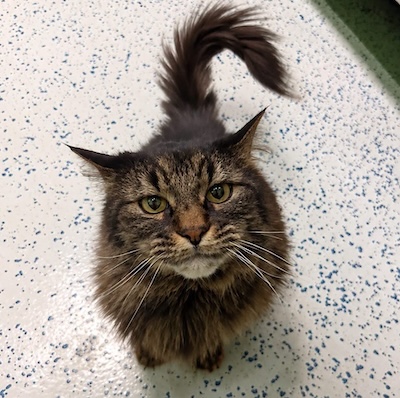
Griffina
Stats: two-year-old tabby, female
Description: Griffina arrived at the LTBHS after waiting for months at another shelter. After undergoing surgery and treatment for a painful abscess, she’s healed up, sassier than ever (pets only on her terms, please), and more than ready to embark on her new life as your kitty companion.
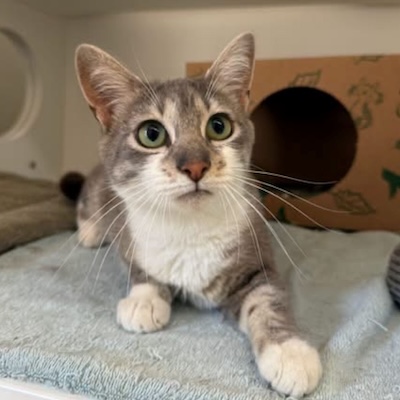
Tambourine
Stats: two-year-old tabby, female
Description: As her name suggests, Tambourine is a feline star in the making. Per LTBHS center staff, she’s looking for a forever home where she can center stage (of your heart, that is) by forging her own paw-print path and soaking up loads of love and affection.
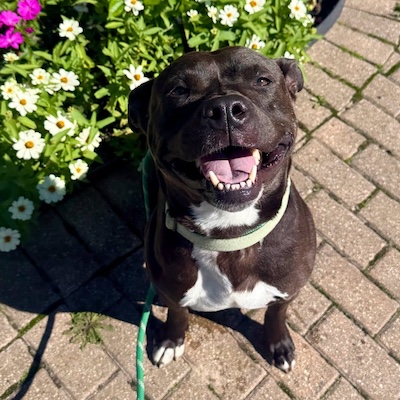
Maddox
Stats: four-year-old, male
Description: With his adorable smile and happy tail, Maddox was born ready for adventure! He’s ready to join a loving household for a future filled with activities, including a few of his favorites: outdoor walks, and maybe a treat or two (or three—who’s counting?).
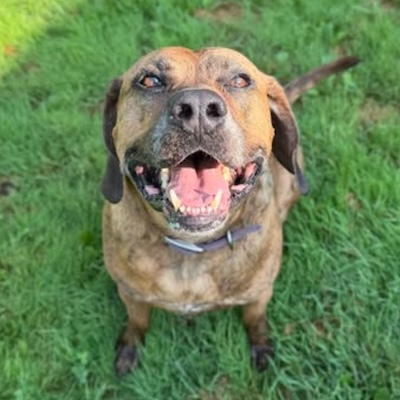
Otis
Stats: seven-year-old coonhound, male
Description: This floppy-eared fella has been stealing hearts and sunny patches of carpet since he arrived at the LTBHS from another shelter. Otis has lived with both dogs and cats, and is just as happy to stretch out on the couch as he is to explore the great outdoors—in other words, he’s your new BFF.