Go Inside TC’s First Wet House
Experimental System Aims to Cut Societal Costs and Save Lives of Chronic Alcoholics
Dann’s House is a station stop on tracks that lead to only two destinations: death or a better life. There isn’t much in between.
The six men who live in Traverse City’s first wet house were selected because this controversial system for housing chronic alcoholics might be their last chance–a last chance to stop them from drinking themselves to death.
The system may also reduce jail stays, expensive emergency room care and police intervention that cost the Traverse City community hundreds of thousands of dollars each year.
But, there’s also debate that the minimal rules and alcohol-allowed atmosphere are only enabling their addiction.
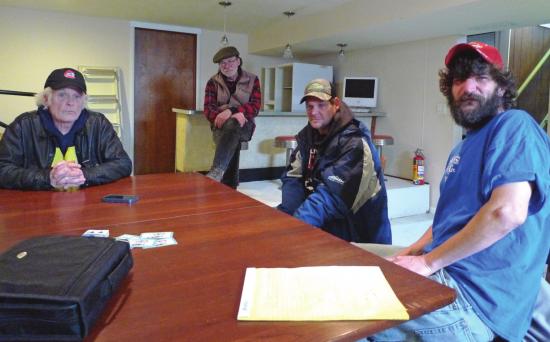
The Express went inside the recently opened house to talk with four residents about what brought them to this place -- and where they hope to go next.
WHEN TRADITIONAL SHELTER FAILS
A wet house operates like a private apartment, albeit one that is monitored around the clock by staff and volunteers who make sure that residents are safe and who provide help accessing needed services. Following this model, residents at Dann’s House have few expectations to meet: pay rent, obey the law and abstain from violence–but not alcohol.
This stands in stark contrast to traditional homeless housing options like Safe Harbor, the cold-weather shelter that is contentiously seeking a permanent home on Wellington Street. Safe Harbor does not require its guests to be sober, but guests at the church-sponsored shelter are not allowed to bring alcohol inside.
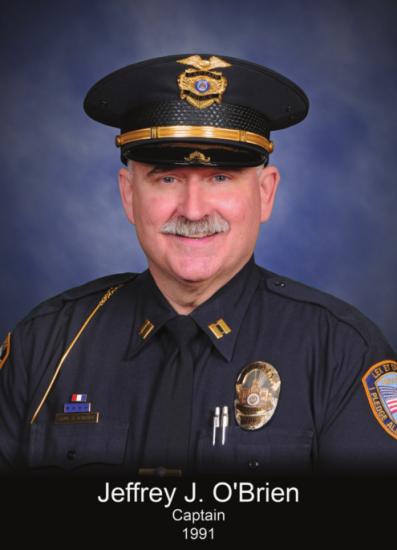
Traverse City Police Capt. Jeff O’Brien explained that 24 years as a police officer–many of them spent on road patrol– have caused him to conclude that, for some homeless, a wet house may be the only alternative to the revolving door between jail, the street, the hospital and the grave.
"You’ll see a pattern as a road patrol officer. You’ll start dealing with someone and it will soon be on a daily basis," said O’Brien. "I’ve seen it over and over. That was the reason I got started with Dann’s House." [O’Brien is a board member of Stoneshouse, the 501(c)(3) nonprofit that operates Dann’s House.]
A WILD PARTY SETTLES DOWN
When the Garfield Township wet house opened Aug. 1, Dann’s House residents celebrated with hard drinking and it didn’t take long for things to get out of hand. Soon, however, life settled down. One of the six even quit drinking.
Fred Buchanan, 56: The first month or so, we wound it up pretty good. My doctor said that my liver was elevated.
Brad Fisk, 39: His doctor told him, "˜I don’t want to see you in the obituaries.’ Buchanan: That scared me bad because he’s a good doctor. And he’s an internist.
Fisk: And we’ve lost over 10 friends [on the street] in the last year.
Buchanan: So I quit drinking liquor and I drank beer for a day or two. And then I went into detox for five days. I don’t want to feel like that anymore. So I came back and it was tough because it took"¦.I’m still not a hundred percent and it’s been almost 30 days. And I don’t try to say anything like, "˜Well, I’m not drinking, [so you guys shouldn’t drink]’ or this and that because I still have bad days and good days just like everybody else.
Fisk: He felt safe coming back to Dann’s House.
WHAT WE CAN DO FOR EACH OTHER
It might seem remarkable that someone would come to a wet house and end up dry, but that’s part of the idea. The comfort of having food, shelter and basic needs met is supposed to remove some of the impetus to drink.
A 2012 University of Washington study found that providing food and shelter to homeless alcoholics at a wet house in Seattle caused them to drink 40 percent less after two years. At Dann’s House, residents are expected to cut back from what they consumed on the street.
O’Brien said Dann’s House is already providing remarkable results after just a few months; city police have responded to noticeably fewer disorderly conduct calls.
The hope is that, without the enormous challenges and fears of being homeless, chronic alcoholics can focus on reclaiming their lives or, at least, create less disruption and financial cost to society.
When Dann’s House first opened, the residents were provided beer. That practice soon ended.
Buchanan: I mean, it’s hard to stay sober.
They say, well, go to AA, do this, do that, you know? The thing of it is, one of the things that helps me is being here, seeing some days how I actually was, if not worse. I just don’t want that no more, you know? I want to live. And if I could help or contribute here, that’s what I would like to do.
Anthony Ciccone, 58: It’s really about the evolution of a group living situation. It started out with a certain philosophy and then it evolved into something a bit more strict because the things that were originally open were taken for granted. Other certain individuals came and went and they took advantage of the situation. They abused the situation. They didn’t appreciate the situation. Therefore, inevitably, they had to make rules.
Buchanan: When they started, they would let us have a beer every hour or whatever.
Fisk: They were providing to the ones that didn’t have health issues more than to the ones that have health issues. It became an issue. So now they don’t provide it. You’re on your own if you want it.
Buchanan: I get a check, OK? It’s very low income. And they’ve [State of Michigan] already messed me up, making me pay for my own insurance. They cut my food stamps to $16. So, my budget alone is very, very tight, just for myself. But when I can, I share with my brothers, you know? We try to do what we can for each other. That’s better than being on the street, Safe Harbor or in jail.
Ciccone: There’s no budget for alcohol, man. There’s barely a budget for food and utilities. If you get it on your own, you can get it on your own.
Buchanan: Some days staff members come in and say, "˜Well, you know, you can work over here.’ Or somebody, one of the fellows, will know somebody and they’ll go work with them for a couple of days here and there. You know, we’re willing to do that type of thing if given the opportunity. Everybody thinks that we’re just a bunch of drunks sponging off whatever, and that’s wrong.
PREFERABLE TO SAFE HARBOR
Dann’s House inhabits half of a tidy, nondescript duplex. The residents might have minor complaints about living with one another, but they all agree this is preferable to living on the street and depending on Safe Harbor as their only option.
Ciccone: The beauty of Safe Harbor is it’s a place where people can go. It’s to keep from freezing. They can eat and they have a place to sleep.
Fisk: That helps a lot to get some good nutrition in your belly.
Ciccone: That’s right, but the problem is when they kick you out and it’s the middle of winter, there is nowhere to go. For example, you wake up on a Sunday morning, OK? It’s January. It’s subzero weather.
Where are you going to go? You’ve got to leave the church at eight o’clock in the morning. Where are you going to go? Walk across town? If you’ve got money, you can hang out at McDonald’s and buy a cup of coffee–if you’ve got money. But, there is nowhere to go. If you were freezing, you used to be able to sit in the jail lobby. That was stopped because of a few idiots that messed up the bathroom.
Buchanan: Safe Harbor is a hard way to go, but it’s better than being on the street 24 hours a day, I’ll tell you that much, because there’s only certain places you can go.
Weekends, there’s nothing open until certain times, like the library at noon. Jubilee House isn’t open on Saturday and Sunday. They do have community meals and stuff around town, but when it’s 17 degrees below zero and that don’t include the chill factor and there’s nowhere to go, it’s pretty rough.
HOW THEY GOT HERE
If a spot opens at Dann’s House, the group has a vote on who should be let in. They consider themselves family and they want to keep it that way.
Richard Emery, 34: I’ve been here since Nov. 1 and I’ve been on the street, off and on, for five, six years. The first night at Safe Harbor, one of the volunteers that works here, his name is Rich, was there. I was laying down at Safe Harbor. I had some earplugs in. I wasn’t sleeping, but then all of a sudden somebody taps me on the shoulder and I take my earplugs out and I turn around and it’s Rich. He says, "˜Well, you’re kicked out of Safe Harbor.’ And he brung me over here. He just said that in a joking way.
Buchanan: There were three of us.
Maybe four. And they would bring in prospects–different people. And they’d come and we’d say "˜Uh-uh’ because we know them. We know how they are. It would just be a problem, and we’d say no.
Like Emery, Fisk was asked to come to Dann’s House.
Fisk: Last year at Safe Harbor, I went to jail five times because I got disorderly and voiced my opinion, you know.
Buchanan: We had to talk him into coming here. He contemplated it for about four days.
Fisk: The six that were selected here were six that didn’t want to pass on under the bridge. Capt. O’B and Harry Hubbell (he started Safe Haven back in ’04 or ’05, now it’s Safe Harbor), he recommended me here. The guys here recommended me. I had to think hard about it because I lived with them on the streets and I really had to think hard about moving into a house with them after being out there under the bridge with them, but I’m glad I did.
Ciconne: He didn’t want to come here. Fisk: Like we stated earlier, there’s less 911 calls with the guys that are here.
Ciconne: Ha! Well, I don’t know if that’s a compliment.
Buchanan: Everybody that’s been on the streets has been in trouble one way or another. It’s not just us three or four. The thing of it is, the reason they picked us is because they feel that we have something there that we can move forward with our life, and this is an opportunity to do that. It’s either that or you can sit here and drink yourself to death, I guess. I mean that’s an individual’s choice. But the thing of it is, the staff make sure to try to get us to our doctor’s appointments, our dentist appointments, our DHS appointments.
A STOPPING POINT OR AN ENDING POINT
Finances for Dann’s House are "on shaky ground right now" O’Brien said, but the house has been able to operate with volunteers and through charitable donations. He hopes that Stoneshouse, the nonprofit that operates Dann’s House, will soon be able to afford to house more people, including women.
Some residents see Dann’s House as a means to get into their own housing. Others plan to stay.
Emery: I think it’s more of a stepping stone. Ciccone: [angry] No! This is not a stepping stone. This is my home. I live here. The problem is the funding and grants.
Emery: I was talking about myself. For myself, I look at this as a stepping stone for something so I can get out on my own– my own apartment. I know I’m going to at least be here through the winter and maybe most of the spring, but I’m going to eventually have my own apartment again, you know?
Buchanan: I’ve been on a waiting list for housing, for low-income, for at least a year, a little more. They said it could take a year, year and a half, and I haven’t heard anything.
Ciccone: The funding [for Dann’s House] has become strained. We don’t know what the future is because there is limited resources for funding for this household.
YOU CAN QUOTE ME ON THAT
The residents are grateful to have a home.
Buchanan: We can come and go as we want. There’s no curfew. If we’re gone a couple two or three days, it’s no problem. Everybody tries to keep up with everybody else to know where they’re at, so we’ve got an idea. If one of us disappears, somebody around here knows basically where we’re at or can find us.
Ciccone: That’s the idea. Buchanan: Because that’s the way it was when we were on the street. We looked out for each other. A lot of us look out for each other.
Fisk: I like Dann’s House because now I have a proper address so I can fill out applications, instead of 222 Cass. That labels me as a homeless person. So, it’s beneficial for the jobseeker.
Buchanan: There’s lots of people who would love to be here. It’s not just a handful or 10 or 12 more. I mean, there’s a whole houseful down there at Jubilee every day– Monday though Friday at 10 o’clock–that would love to be here. But, they’ve got to pass the vote and we’re full, so there’s nothing there to even vote on.
Ciccone: I feel very fortunate and very grateful.
Buchanan: I’m glad to have the opportunity to be here.
Ciccone: I am deeply grateful for this situation and I feel blessed, personally.
Buchanan: I don’t know, being here with you, I don’t know about being blessed–no, I’m just teasing you.
Ciconne: I’m truly sincere in this statement.
Buchanan: So am I. So am I. Ciccone: It’s nice to have a home to come home to. You can quote me on that.
Some quotations in this article have been edited for clarity.
For more information, to make a donation or to volunteer at Dann’s House, visit www. stoneshouse.org.
View On Our Website