
Going After the Polluters
The Watershed Center is holding Brunette Foods accountable for polluting Elk Rapids waterways
By Ren Brabenec | Aug. 8, 2026
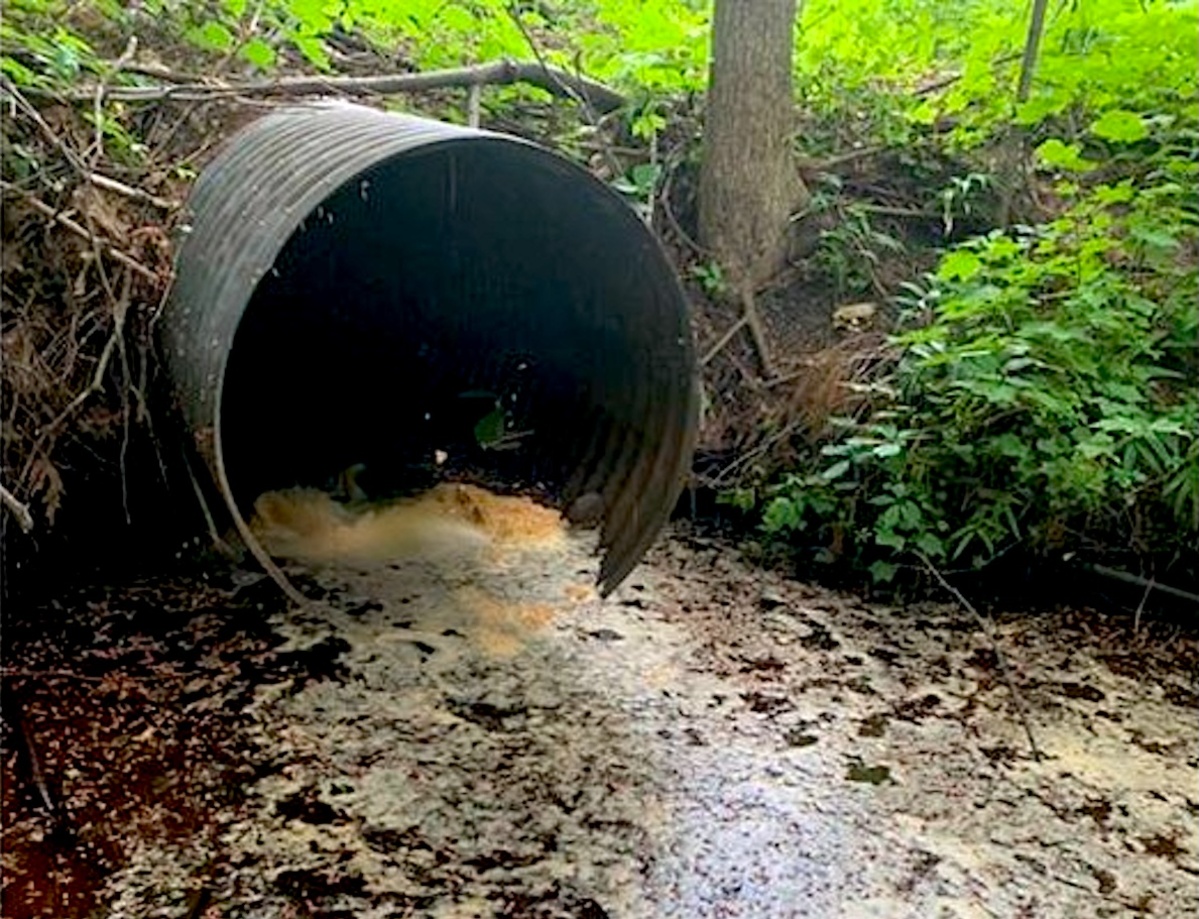
In such a pristine place as northern Michigan, the pollution woes of major cities can seem like a far-away issue…until they turn up in our backyards, as in the case of Elk Rapids fruit processor Burnette Foods.
Traverse City-based nonprofit The Watershed Center Grand Traverse Bay has been in court for years with Burnette, who they claim has has illegally polluted wetlands and tributaries that ultimately drain into Lake Michigan.
Christine Crissman, executive director of The Watershed Center, says the organization’s scientists closely monitor water quality in a variety of locations to identify threats, gauge restoration progress, and track changes over time.
“[The work] includes reviewing and interpreting water quality data, evaluating land use and landscape characteristics, and examining public records related to projects and permits,” says Crissman.
In the case of Burnette’s pollution, Crissman says it all began when her team was asked to help interpret concerning water-quality data from Spencer Creek, a tributary south of the Village of Elk Rapids that flows into Spencer Bay in Elk Lake.
Assessing Pollution Concerns in Spencer Creek
“Our initial review suggested an upstream source of pollution, and further investigation led us to Burnette Foods’ fruit processing wastewater spray fields that drain to a wetland system that is the headwaters of Spencer Creek,” Crissman explains.
While those types of spray fields are permitted under the Michigan Department of Environment, Great Lakes and Energy’s (EGLE) Groundwater Discharge program to treat wastewater through plant uptake and soil infiltration, public records show the system was not functioning as intended.
“In fact,” Crissman continues, “Burnette has a long history of noncompliance, with thousands of documented permit violations dating back more than a decade. Despite ongoing complaints, documented concerns from EGLE staff during site visits, and formal violation notices, the facility’s wastewater management practices continued, and it became evident that both groundwater and surface water quality were being impacted.”
As a fruit processing facility, Burnette’s wastewater contains a mix of organic fruit waste and processing chemicals. While larger particles can be filtered out, Burnette Foods’ treatment process has struggled to remove all pollutants.
When we asked Crissman what the pollutants from Burnette look like, she introduced us to a term called Biochemical Oxygen Demand (BOD), which refers to the amount of dissolved oxygen required by microorganisms to decompose organic matter.
If there is a large amount of organic matter in a body of water, as has been the case in Spencer Creek due to Burnette Foods’ wastewater, the bacteria that feed on that organic matter consume the water’s oxygen rapidly, which can critically deplete oxygen levels and harm aquatic ecosystems.
According to Crissman, the BOD levels in Spencer Creek were significantly elevated, reducing dissolved oxygen and creating stressful and even lethal conditions for fish and other aquatic life.
“In addition to BOD, Burnette Foods’ wastewater contains nutrients like phosphorus and nitrogen, as well as chloride, sodium, iron, manganese, and other compounds. These pollutants can degrade water quality and disrupt the balance of wetland and stream ecosystems,” Crissman tells us.
“Monitoring data from Burnette Foods, EGLE, and Elk-Skegemog Lakes Association document widespread and long-term impacts,” Crissman adds. “Collectively, these data show numerous violations of groundwater discharge permit requirements and exceedances of water quality standards in Spencer Creek.”
Taking Legal Action
The Watershed Center’s preferred approach is to engage directly with the responsible party and work collaboratively toward a solution.
“But after informal efforts with EGLE and Burnette failed to resolve ongoing concerns about Burnette Foods’ unauthorized discharges into the wetlands, Spencer Creek, and Elk Lake, The Watershed Center—along with Elk-Skegemog Lakes Association and the Grand Traverse Band of Ottawa and Chippewa Indians—sued Burnette Foods in 2023 to enforce the Clean Water Act and Michigan Environmental Protection Act,” Crissman says.
The legal case has been ongoing since then. After two years of motions and discovery, the U.S. District Court issued an Opinion and Order, which Crissman summarizes for us.
“The court determined that Burnette Foods was discharging pollutants into navigable waters from a point source without a permit in violation of the Clean Water Act, and the court found Burnette Foods violated the Michigan Environmental Protection Act through conduct that has or is likely to pollute, impair, or destroy water resources by violating its groundwater discharge permit.”
The court also denied Burnette Foods’ motion to dismiss.
Crissman tells us the case is now in the remedial phase. The court’s next task is to decide whether Burnette Foods should be required to stop its unpermitted discharges and violations, and whether it is responsible for civil penalties authorized by the Clean Water Act.
A Precedent-Setting Case
Crissman says that in addition to being a significant win for clean water and healthy ecosystems in northern Michigan, the ruling is precedent-setting in that it is the first ruling of its kind since the Supreme Court’s Sackett v. EPA decision redefined “waters of the United States” in 2023.
Without getting too much into the legal weeds, that ruling drastically narrowed the scope of the Clean Water Act. In 2023, the Supreme Court held that the EPA’s jurisdiction over “adjacent wetlands” is limited to those with a “continuous surface connection” to traditional navigable waters. The effect of the ruling was a stripping of EPA protections from about half of the nation’s wetlands.
It is possible that this local ruling could be used to challenge the 2023 ruling in future cases, potentially refortifying the Clean Water Act’s protective scope or at least setting a precedent for other states to use in state-level suits against polluters.
“In our case, the U.S. District Court recognized what we have always known,” Crissman says in closing. “Groundwater, wetlands, creeks, and lakes are all connected, and protecting one means protecting them all. This ruling not only protects these waters, it also sets a powerful precedent for others who are working to protect water in their communities across Michigan and beyond.”
Learn more about The Watershed Center’s work at gtbay.org.


Trending
A Big Push for Land Protection in Leelanau
Fresh on the heels of a massive lift to preserve the former Sugar Loaf ski area, the Leelanau Conservancy is trying to close… Read More >>
Parting Ways with Hazardous Waste
Have you been doing home and lawn projects all summer long? If so, you may have some products like deck stain, fertilizer, o… Read More >>
The Great American Pie Contest
Take a bite out of Antrim County Fair’s Great American Pie Contest! Although Antrim has one of Michigan’s smalle… Read More >>