Naturally Sparkling
Meet the northern Michigan winemakers embracing pét-nat wines
By Kelsey Sanders | Aug. 15, 2026
Pét-nat wine (short for pétillant-naturel) is not a new invention, despite what its pre-COVID revival would have many think. In fact, this type of wine was accidentally discovered around 1531 by monks in Limoux, France. What makes it different from traditional wine styles are three main components: It only goes through one fermentation process (instead of two); it traps carbon dioxide inside the bottle, creating natural carbonation; and it doesn’t contain added commercial yeast or sugars.
These differences create a wine that can look cloudy or hazy, but with flavors that are typically fruity and aromatic. It also means that pét-nat wines are lower in alcohol, hence why they became famously paired with brunch as a cheaper alternative to traditional champagne.
Three local wineries have added pét-nats to their menu, and one has even won awards for theirs.
Brengman Family Wines
Brengman prides itself on “doing things as carefully in the farming and winemaking process as possible,” says Robert Brengman, one of the winemakers.
“We found the lane for slow wine versus fast wine,” he shares. “Fast wine is the conventional method—the method that allows you to put 100 elements of chemistry into the process. We all started out in that lane, and we struggled with it from the very beginning because we kept thinking, ‘Why aren’t we using the natural yeast that’s coming in from the vineyard around us?’”
Back in 2021, Brengman and his co-winemaker, Ryan Tompke, fermented a small tank of wine without killing the wild yeast. The result: The wild yeast took over and ended up making a fabulous tank of wine.
“Even our red was better than when we used our commercial yeast,” Brengman says. “In 2023, we started using our natural yeast throughout all our processes. Since then, it’s been 100 percent wild yeast.”
To some, “wild yeast” may sound odd or even unappetizing, but it’s all part of the winemaking process.
“You crush the grapes to create the juice, and the juice is blended with what’s been pressed out. When you press the juice, whatever yeast is around will be in that batch of liquid,” Brengman explains. “Conventional winemaking would require you to kill the wild yeast by dumping sulfur into the batch to sterilize the juice. When that mixture settles the juice, then it’s ready to start fermenting, and that’s when the conventional process adds yeast into the juice to ferment everything. Sometimes it works and sometimes you need more commercial yeast. To make a pét-nat wine, you don’t kill the yeast at the beginning and you don’t add sulfur, you just temperature-control it.”
The pros to this type of process are that it’s a more natural type of wine, it requires fewer added ingredients, and it’s easy to do with minimal start-up equipment and ingredients.
The cons, though, are that there’s always risk when letting a wild yeast take control of the wine. Bad bacteria can develop and fight against the good yeast and that can create flaws. Or the mixture can become unstable if the temperature isn’t maintained properly and the bottle can explode when opened.
But Brengman enjoys the challenge of the pét-nat process.
“Why wouldn’t you be on the natural side of winemaking?” he says. “We’re trying to develop a true flavor of here—we plant, we grow, we make everything in Leelanau. When you grow something but then kill the wild yeast and you’re inoculating it with a commercial yeast, it’s from another place—another country. You just altered your place. It’s really not from here now. That’s important to us. We want to create a true taste of Leelanau.”
That mindset has won Brengman Family Wines multiple awards. The prestigious invitation-only American Fine Wine Competition awarded 10 Brengman wines high honors in the 2026 judging, including three double golds, five golds, and two silvers.
BOS Wine
Winemaker Dave Bos wants his customers to just enjoy wine. “I tell people to stop overthinking it and to be an enjoyer,” he says.
Bos, who calls himself a farmer first and a winemaker second, is all about making wine fun and enjoyable for as many people as possible. He explains the pét-nat process as “the best way to make the wine as natural as possible in a fun way.”
“I’m not trying to manipulate the wine at all. It’s a living product and that’s the beauty of pét-nat—it’s changing and it’s so cool. I like the idea that wine should be living and when it’s not, it’s a product,” says Bos.
While he admits that BOS Wine’s pét-nat isn’t a true pét-nat, it still is according to the loose rules of how to make it.
“There’s no sulfur in ours—nothing’s added. I rack it off the leaves, meaning that when it’s fermenting, I chill the tank down before it’s done, pull the clean wine off the leaves and off the dead yeast cells, and by doing that, it allows the wine to finish drying. Then I have the leaves that have sugar and yeast left on them, and I add those leaves back in, so I get a consistent bottling. I want to make sure the wine can pour by the glass and not blow up on you,” Bos explains. “There’s room for error but that’s the fun thing about it.”
Contrary to what some winemakers may think about pét-nats, Bos is all for them.
“A younger generation connected to this wine 5-10 years ago over brunch, and I love the intentionality behind their decisions and choices,” he says. “It’s not meant to age, it’s meant to be a true, enjoyable wine right now, and that’s a really cool thing we can do in Michigan.”
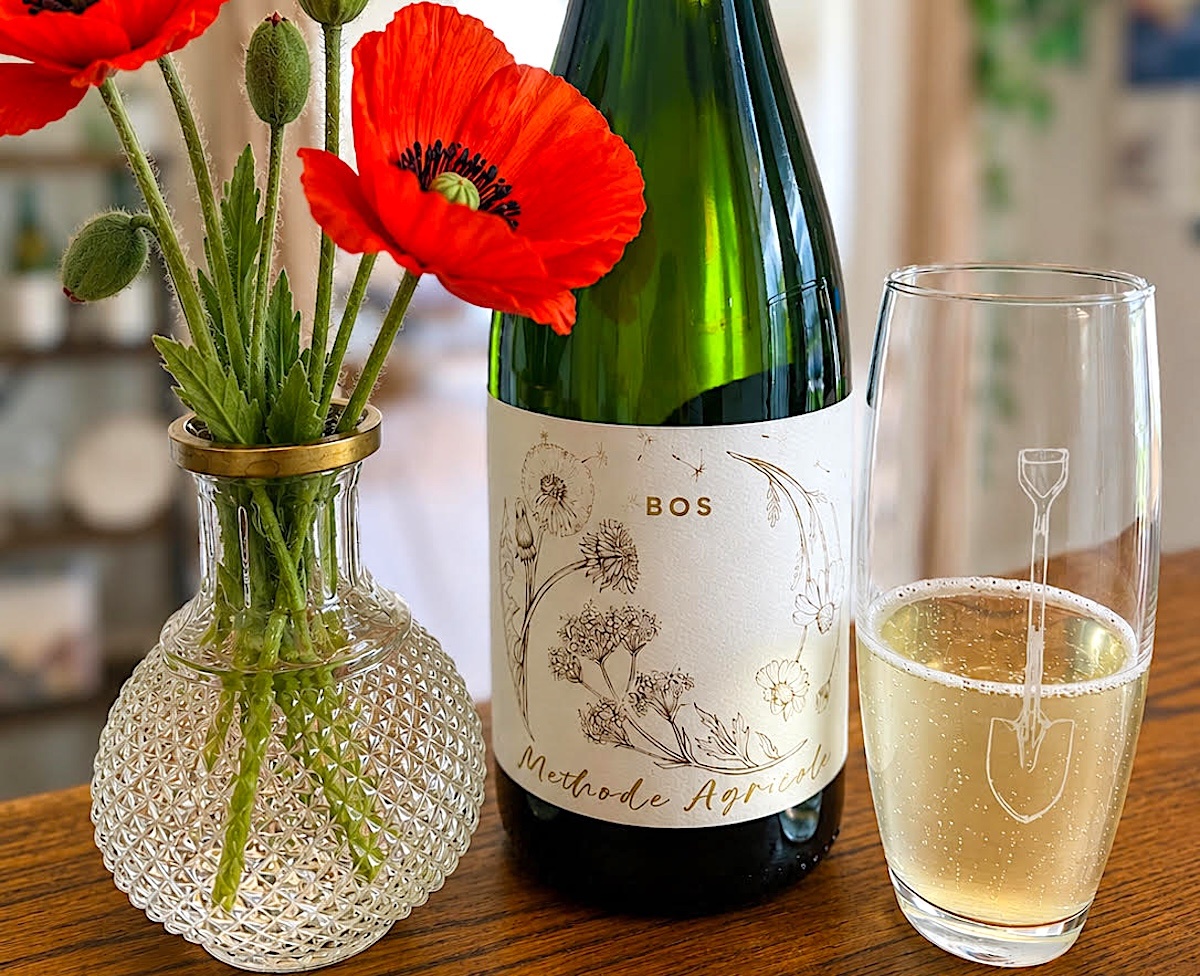
BOS Wines offers one pét-nat wine called Methode Agricole, which has been well-received by customers, and Bos hopes to add another to the menu at some point, when the vineyard speaks to him that way.
Mawby Sparkling Wines
Mawby is another winery dabbling in pét-nats, although most of their wines use the traditional methods for producing sparkling wines, meaning that almost all the bottled products have effervescence from a second fermentation in a closed vessel. After 52 years in business, Mawby has been making wine and caring for the whole environment through sustainable practices to ensure that their vineyards and their surrounding lands are protected to the best of their ability.
Mawby is known for a laid-back tasting room experience and shares a property with Big Little Wines, allowing visitors to enjoy two distinct tasting rooms in one location.
Mawby’s winemaker, Mike Laing, focuses on making wine that is positively received. They currently make a version of a pét-nat called Eff Nat.
“It’s pét-nat in style, but not exactly,” he explains. “It’s effervescent natural that we’ve made for five or six years, and it’s delightful.”
Laing explains that some pét-nats are more “natural” tasting than others, meaning they have a very clean and fruit-forward style.
“Usually there is sediment left in the bottle because the fermentation process happens in the bottle, but we remove it,” he says. “We do that because the solids can gush and you can lose the wine, which can be frustrating. The yeast left in the bottle can muddy the fruit taste, so we clean it up a bit. Typically, pét-nats are more fruit-forward because they’re released relatively young and you can capture the fermentation aromas.”
As of now, Laing only plans to keep their one pét-nat on the menu.


Trending

Summer Hot Spot: Median Sale Price for Area Homes Up 88 Percent Since 2019
Summer has long been the most active season for buying and selling real estate in northern Michigan. So, how was summer 2026… Read More >>
Donating Ahead of Cold Weather
Hard to believe, but winter is not that far away. Jubilee House, Traverse City’s only drop-in day shelter for adults e… Read More >>
TC State Park Reopening in October
Construction work on the Keith J. Charters State Park in Traverse City is wrapping up early, according to the Michigan DNR, … Read More >>