A Guide to Pigeon River Country State Forest
Hike, bike, camp, fish, and ride in the Big Wild
By Eric Cox | June 20, 2026
The world’s wild places are disappearing. Roads, farms, housing, businesses, and infrastructure are daily permeating our green spaces, leaving virtually no area untouched.
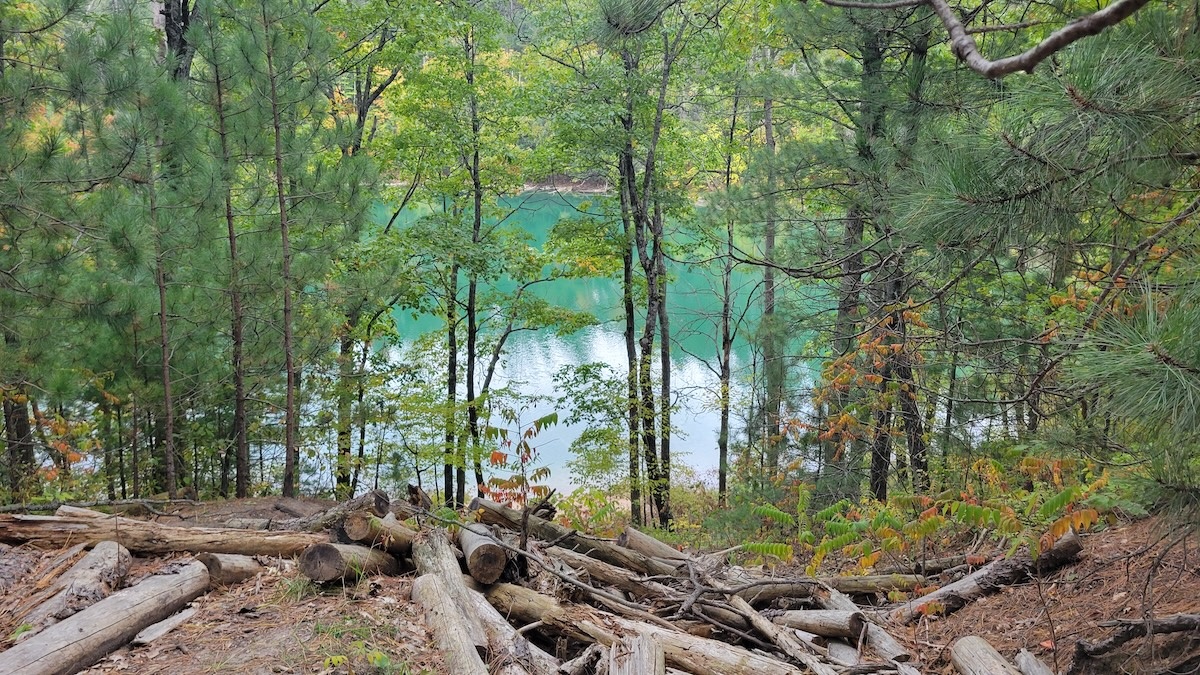
But in the heart of Michigan’s northern lower peninsula, an area about half the size of New York City is maintaining its rugged, remote textures. Known as the “Big Wild,” Pigeon River Country State Forest is 100,000+ acres of undeveloped and untainted forest, water, and wildlife.
“The Pigeon River Country is a treasured destination for hunters, fishermen, hikers, campers, bikers, horseback riders, mushroomers, canoeists and photographers,” the Pigeon River Discovery Center’s website says. “It is dedicated to offering solitude and contemplative recreation to those who seek freedom and quiet beauty among wild undeveloped woods...”
The Big Wild is 12 miles wide and 20 miles long, encompassing an impressive array of trails, lakes, ponds, rivers, streams, and animals—all mostly shielded from society’s encroachment. Covering parts of Otsego, Cheboygan, and Montmorency counties, this vast expanse of wilderness wasn’t established by accident, of course. State officials intended to preserve the area.
“A century ago, Michigan set aside the 6,468 acres of tax-reverted lands that would become the nucleus of the Pigeon River Country State Forest,” the DNR says. “The land had been logged, some of it burned by forest fires, some of it cultivated by farmers who soon learned that it was not good crop land. The forest continued to expand, mostly with lands purchased with deer hunting license revenue.”
The Pigeon River Country’s pristine nature, its sprawling forests and gin-clear waters have inspired strong feelings among outdoors people for decades, but maybe none so insightful as those of Ford Kellum. Years ago, Kellum worked for the DNR until he felt compelled to quit his job and take up the fight against proposed oil drilling in the forest.
“You’ve got your free-flowing rivers. … You’ve got lakes that have no cottages around them,” he said in defending the forest. “You’ve got trail roads that are just two ruts. You’ve got the big trees; virgin or not, they’re big. … It’s pretty. And you can get back into some of these places and have solitude. People need a little of that.”
We sure do! So here’s your guide to Pigeon River Country State Forest.
Pigeon River Discovery Center
Located in the heart of the Big Wild, the Discovery Center is where visitors go to learn the entire history of the Pigeon River Country State Forest. ADA accessible and brimming with interesting exhibits and lore, the Discovery Center was established in 2018.
“On Twin Lakes Road [right behind forest headquarters], each of the seven rooms of this historic log cabin has a different theme,” the Discovery Center’s web page says. “Original documents and photographs, quotations and recorded interviews educate visitors about the forest’s history, the people who loved it, the controversies that shaped it, and its many recreational offerings. Multi-format exhibits highlight the delicate balance of forest life, man’s role in that balance, and the results of good decision making over the last 100 years.”
Educational programs for all ages are offered year round, and include topics like Michigan’s Raptors, Native Plants & Nature Hike, Water Quality Connections, and more.
Hiking
When it comes to trails, the world is your oyster, with options that are simple one-mile loops or up to 80 miles long. Per the website, “You can hike anywhere in the forest boundaries (unless specifically prohibited by DNR rule or state law).” Biking is allowed on all vehicle roads, as well as High Country Pathway and Shingle Mill Pathway.
Speaking of pathways, there are plenty to choose from—nine of them, to be exact—whether it’s the Towerman’s Watch Interpretive Pathway starting at PRC headquarters with loops of 3.3 or 3.9 miles or Sinkholes Pathway, which takes you on a 2.5-mile trail around sinkholes that are as deep as 100 feet. (Be careful out there!)
Rustic Camping
Tranquility awaits visitors eager to lay their sleepy heads down in snuggly sleeping bags. If you’re into primitive camping, this state forest is for you.
In all, there are nine campgrounds in the Big Wild, three of which are designated equestrian campgrounds. As in all state forest campgrounds, these sites are offered on a first-come, first served basis. All are equipped with fire rings, picnic tables, vault toilets, and potable water. Self-registration information is in each campground and campers simply put cash or check in the registration envelope and then into the pay post.
According to the Pigeon River Discovery Center, Pickerel Lake Campground was once the site of a Civilian Conservation Corps (CCC) Camp in the mid-1930s. This is the PRC’s largest and most popular “family” campground. The 39-site campground is on the shore of Pickerel Lake and features an excellent swimming beach, with boat launching site, area for day use picnicking, hiking trail around the lake, and room for large camping rigs.
Wilderness Angling
Ernest Hemingway famously fished the Pigeon River and once referred to the Pine Barrens region as some of the finest country he’d ever seen. He used the area as a setting for some of his Nick Adams stories, which offered detailed descriptions of the land and the fishing.
It’s no wonder Ernie enjoyed himself! Rainbow, brook, and brown trout are all species in the Pigeon River Country’s many waters. Largemouth bass, pike, and pan fish are also prevalent. The state annually stocks many of the small lakes and ponds, leading to some fishing restrictions. Anglers should carefully study these regulations before wetting a line.
Horseback Riding
What mode of transportation could be better than horseback for Michigan’s wildest space? With over 50 miles of designated equestrian trails, the Big Wild is well-suited for saddle-based exploration. The trails run mostly north and south along the park’s vertical length.
The Elk Hill Equestrian Campground and Trail Camp is near the heart of the Pigeon River Country and offers 11 camp sites, six of which will accommodate a 40-foot vehicle. According to Pure Michigan, each site has a fire ring, picnic table, and picket posts. Amenities include vault toilets, water from a hand-pump well, an accessible mounting block, and manure bunkers.
Perched on a bluff overlooking the Pigeon River, this picturesque campground, where most of the equestrian activities are centered, is located 14 miles east of Vanderbilt via East Sturgeon Valley Road, Witness Tree Road, and Twin Lakes Road. Sites can be reserved through the DNR Reservation System or 1-800-447-2757. Reservations must be made at least 72 hours in advance.
Elk Viewing
The animals in the largest elk herd east of the Mississippi River are reportedly pretty scarce throughout much of the year. But, with the right timing and a choice of four elk viewing stations in the Pigeon River Country State Forest, there’s always a chance you’ll spot them.
According to the DNR, the best bet for viewing is in the elk mating season, September to early October. “The bulls make loud vocalizations (bugling), break brush, and sometimes spar for dominance with their antlers,” the Discovery Center website says. “Another good time has been late April through mid-May when elk are active throughout the daylight hours eating new green growth.”
Elk disappeared from Michigan in the late 19th century, driven out by loss of habitat and unrestricted hunting. In 1918, seven elk were brought to Michigan and released near Wolverine. That herd grew, but over the years poaching and predation knocked it down.
“The herd is now maintained at up to 900 animals, primarily through habitat management and annual elk hunts since 1984. It is established policy to manage population and habitat so the Pigeon River Country remains the nucleus of Michigan’s elk herd,” says the DNR.
Though elk viewing is not confined to these areas, there are four designated elk viewing stations in the forest. Keep in mind that minimal signage appears in the forest and cell phone coverage is spotty.
- 3.5 miles east of Vanderbilt on Sturgeon Valley Road, then 3 miles north on Fontinalis Road
- 8 miles east of Vanderbilt on Sturgeon Valley Road at a pipeline corridor
- 4 miles north of the Pigeon River Country State Forest Headquarters on Osmun Road
- 18 miles east of Gaylord on County Road 622
To learn more, visit pigeonriverdiscoverycenter.org.

Trending
Summer Hot Spot: Median Sale Price for Area Homes Up 88 Percent Since 2019
Summer has long been the most active season for buying and selling real estate in northern Michigan. So, how was summer 2026… Read More >>
Donating Ahead of Cold Weather
Hard to believe, but winter is not that far away. Jubilee House, Traverse City’s only drop-in day shelter for adults e… Read More >>
TC State Park Reopening in October
Construction work on the Keith J. Charters State Park in Traverse City is wrapping up early, according to the Michigan DNR, … Read More >>