
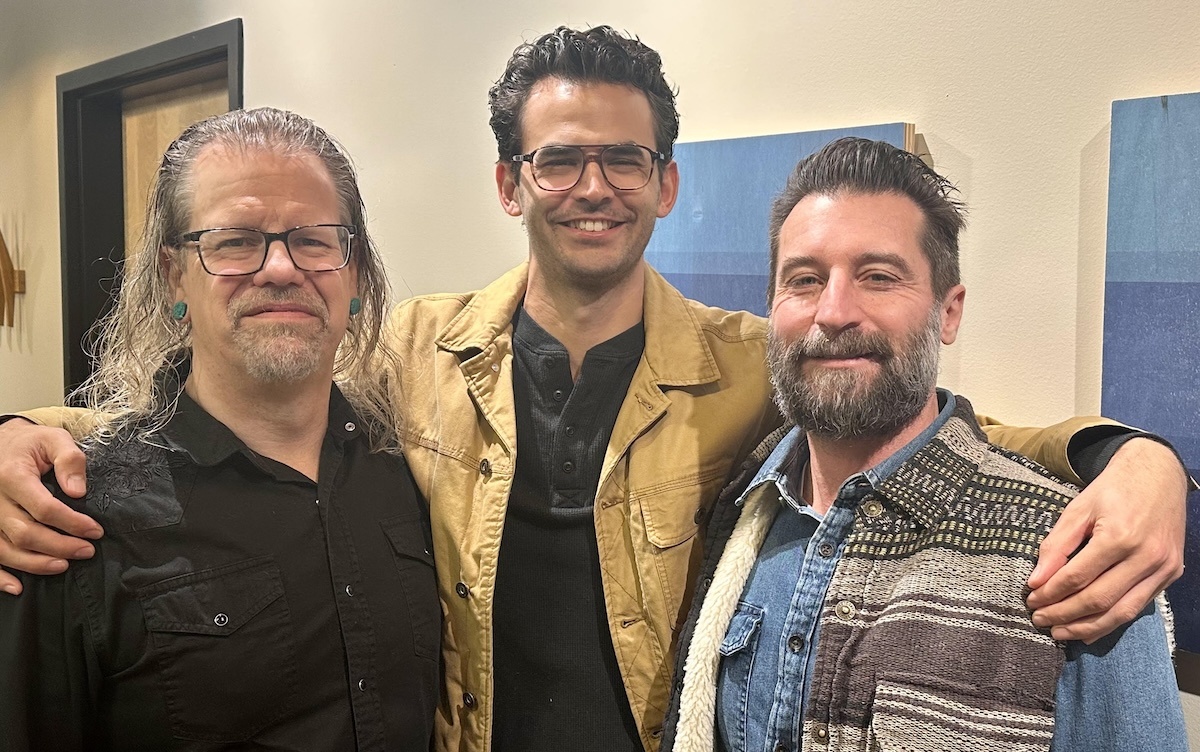
Introducing Traverse City Men’s Circle
Building community, fostering vulnerability, and nurturing accountability, one man at a time
By Ren Brabenec | Nov. 7, 2026
By the dim light of smoldering bonfires in the quiet softness of northern Michigan backyards, a movement is growing. Men of all ages gather, sometimes in open settings on hiking trails and at public parks, but more often in private settings at facilitators’ homes.
The intent? To address the multi-pronged crises facing men in the 21st century, and to do so in a way that empowers men to take responsibility for not just their own well-being, but for the health and vitality of their communities.
Male Crisis by the Numbers
In every metric measuring well-being—heath, employment, education, and relationships—American men are experiencing a decline.
Men make up half the population, yet they account for 79 percent of suicides (80 percent in Michigan, according to the Michigan Public Health Association). Male substance use is also rising, with 25 percent of men reporting annual cannabis use and 19 percent reporting monthly use (up from 22 percent and 16 percent in 2021, respectively).
In the years since the economic recession caused by the COVID-19 pandemic, male unemployment has remained high and has climbed every year, while female unemployment has fallen to pre-COVID levels. Men are also not getting educated to the degree that they used to. Today, just 46.6 percent of male high school graduates enroll in college, compared to 59.9 percent for female graduates, according to Michigan’s Department of Lifelong Education, Advancement, and Potential. Men also represent 51 percent of college dropouts, despite composing only 40.1 percent of the student body.
According to Census Reporter, 38 percent of Michigan men have never been married, compared to 20 percent a half-century ago. Men are also reporting stark declines in their platonic relationships. Today, 15 percent of men say they have no close friends, a 500 percent increase from 3 percent in 1990.
How are men coping with these declines? Not well. Online gambling and sports betting have surged, with 52 percent of men gambling online and emergency rooms reporting a near-doubling in gambling-related self-harm since 2024. The American Institute for Boys and Men reports 65 percent of men view pornography regularly, up from 45 percent a generation ago.
According to Loghan Call, founder of Traverse City Men’s Circle, improving men’s lives is possible, but it requires men put in the work, access their vulnerability, seek support from other men, and take responsibility for their condition rather than scapegoat others.
“As men, we have a choice,” Call says. “We can recede into isolation, addiction, violence, and resentment. Or we can recognize that beneath much of the tension around masculinity is something deeper: a world profoundly harmed by the unconscious masculine shadow, and that we as men have been deeply harmed by it, too.”
Vulnerability & Strength
Call began by saying he founded TC Men’s Circle in 2022 to provide a safe space for men to work on themselves.
“Many men are having the experience that their voice, their needs, or even their presence isn’t particularly welcome in the world right now,” Call says. “To help address that, Men’s Circle is delivered by facilitators who have training in a melting pot of modalities, some of which are Jungian, others of which draw from Vince Chafin’s work with the Sacred Sons.”
Call says men’s work is not new in the grander scope of humanity, but because it requires accountability, responsibility, and vulnerability, this type of men’s work has typically been relegated to the back burner in America’s primarily male-led society.
He says his group hopes to change that. “Many of us grew up without strong masculine figures who embodied both vulnerability and strength,” Call tells us. “We learned, consciously and unconsciously, that being a man meant suppressing emotion, proving ourselves, competing, disconnecting, or figuring it out alone.”
TC Men’s Circle was created to give men an opportunity to end intergenerational cycles of social conditioning that have brought men to where they are today.
Call recites some of the commitments that attendees are invited to embody. “This [cycle] ends with me. I am choosing to shift from being a victim who blames and harms others for what I experienced, to finding the courage to say ‘I need help and support’ in unpacking and navigating everything I have been told to suppress, repress, and deny.”
While the technologies, rituals, processes, and programs used in TC Men’s Circle are not new, they are being applied for the first time to local men who have never experienced anything like it before.
“I want our group to grow and get better at doing the work,” Call says. “I have to be honest, most men are not ready for men’s work, and we as facilitators still have much to learn on our own quests to becoming great facilitators. But we’re working hard to get better at doing the work ourselves and helping other men do the same.”
“The way out is through,” Call adds. “We get to decide what we carry forward and what ends with us. This work doesn’t just change the man doing it. It ripples outward to our partners, children, friendships, communities, and most importantly, the men who come after us.”
Open Circles
Not every Men’s Circle looks the same, so we checked in with participants to better understand how men’s work happens.
Pohai Müller learned about the organization while living in Northport. He said he was initially drawn to the organization for its work to counteract male loneliness in rural northern Michigan.
“The open circles involve a commitment of time, courage, and character,” Müller says. “They are regular meetings where men gather and talk about anything under the sun. But there are also definitive structures to the open circles, including a facilitator at each gathering who leads the meeting, offers deep questions, and gives the men in attendance opportunities to listen, reflect, and contribute whatever’s on their mind.”
Müller tells us the meetings typically open with smudging, meditation, and breath work. The sessions are always three hours long, and the men leave their phones behind before entering the meeting area.
“It’s a sacred and safe space,” Müller adds. “The meetings provide an opportunity for men to gather and talk about their challenges in life and share emotions in ways that our society has not deemed normal behavior for men.”
“There were days when I felt some apprehension about going to Men’s Circle, simply because it required vulnerability and courage to show up in a meaningful way,” Müller says in closing. “Just about every time though, that feeling dissipated upon stepping into the circle. On several occasions, men shared stories of things that weighed on them, and I thought, ‘Oh my gosh, I feel the same way.’ It helped put things in perspective in ways that everyday life simply cannot.”
Closed Circles
Josh Hart says TC Men’s Circle also offers a “closed” circle for those willing to commit more time.
“The closed circles involve small groups of six,” Hart explains. “We meet, the same handful of men, every other Monday, for three hours, and we commit to doing that for one full year. Once the year is up, we reassess how we want the next year to look.”
Hart says he began attending TC Men’s Circle almost four years ago. He’d been organizing and attending other groups, but none felt like they were nurturing the growth he was seeking.
“I didn’t like my first 40 years, and I wanted the next 40 to be better, so I sought a group that would help me become accountable to myself, my business, family, and community,” Hart says.
Hart attended the open circles first, and before he knew it, he was listening, sharing, and talking about feelings and emotions he didn’t know men could talk about. “What part did you play in that conflict with your partner? What could you do to foster a better relationship with your parents?” Hart says as examples of the types of questions men ask when discussing each other’s challenges.
“There’s been a ripple effect of accountability,” Hart believes. “My dad and I now have a four-minute check-in every morning. Because I started taking more responsibility for my relationship with him, he began doing the same with me. The same has occurred with my brother, partner, and friends. Rather than constantly running from conflict, I’m showing up for the people in my life, and they’re doing the same for me.”
Visit tcmenscircle.com for more information.


Trending
We Finished Their Journey
On Nov. 10, 1975, the Edmund Fitzgerald sank in the waters of Lake Superior, along with all 29 crew members. Fifty years lat… Read More >>
Sip to Support MS at Black Star Farms
Black Star Farms of Suttons Bay will be hosting an “afternoon of wine, film and conversation in support of those livin… Read More >>
A New Season for Paint Grand Traverse
Paint Grand Traverse, Crooked Tree Arts Center’s popular plein air painting competition that draws artists from across… Read More >>