
The Superfoods of Winter: Exploring Year-Round Farmers Markets
Cold-weather farmers and markets tout their offerings
By Anna Faller | Jan. 3, 2026
Finding healthy, locally-grown food—a practice touted for its nutritional benefits, better flavor payoff, and cost efficiency—can feel next to impossible once the open-air stalls have shuttered their tents and the ground is covered in snow.
But never fear: NoMi farmers are still hard at work, offering fresh options all through the year. Per Jim Lively, co-owner of The Lively NeighborFood Market in Empire, northern Michigan’s burgeoning winter market scene is a veggie good place to start.
“We didn’t invent this. You can eat [in northern Michigan] year-round!” he says. “Our grandparents knew how to do this, and now we’re trying to remember how to do it with local food.”
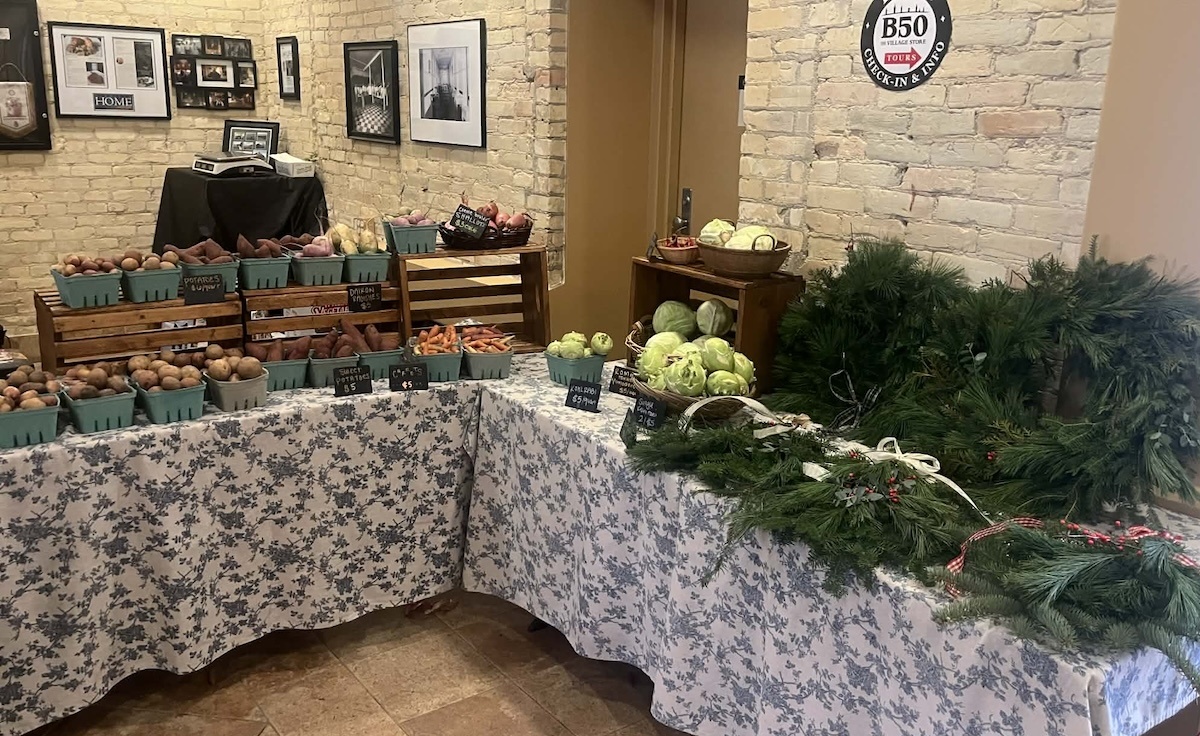
As Lively underscores, the concept of tasting the local difference is far from new. In fact, the Indoor Farmers Market in the Mercato at the Village at Grand Traverse Commons has been operating for about 15 years, with many of those years at peak vendor capacity.
Co-founded by vendor coordinator Diana Jelenek of Spring Hollow Farm (Buckley), the Commons market features some 35 regular merchants, most from within the five-county region, who pack the halls of the Mercato with local goodies each Saturday from November to April. “It’s a good community,” Jelenek notes.
Meanwhile, The Lively NeighborFood Market, which opened in 2024, operates on the consignment model pioneered by Argus Farm Stop in Ann Arbor (i.e., farm partners set their own prices, with the market receiving a small sales percentage). Both locations aim to provide a reliable platform for local growers with a focus on fresh, healthy eats.
Trouble is, says Jelenek, many locals still don’t know these outlets operate in the off-season.
“People don’t have the mindset that we still have wonderful, healthy food in Grand Traverse County all year,” she notes. “There’s so much available—they’ve just got to come out!”
What’s Growing?
When you do head out for a winter market run, what local goodies might you expect?
The first, and perhaps most obvious, category of local produce is root or storage crops like potatoes, carrots, parsnips, turnips, radishes; alliums (onions, shallots, and garlic); and dozens of region-specific veggies, like rutabagas, winter squashes, sunchokes, celeriac (aka, celery root), and kohlrabi whose tougher skins and dense flesh allow them to withstand the cold.
“You need those,” Lively notes. “It’s how people have always gotten through the winter.”
Nic Welty, a farmer and co-owner at 9 Bean Rows (Suttons Bay), says the key is devising a storage facility that suits the farm’s needs and production capacity. Second Spring Farm (Cedar) and Providence Organic Farm (Central Lake), for instance, are both known locally for their root crops, and therefore utilize more cold storage than operations with other specialties. These facilities can range from basement root cellars to separate coolers and walk-in units, all of which are calibrated to meet the climate and ventilation needs of the crops they house.
When stored this way, he adds, cruciferous veggies like cabbage and brussels sprouts, which pop up in droves throughout the fall, as well as fennel and even heartier fruits like apples and pears, can easily weather colder temperatures.
“These are all crops that can be brought in at their peak at the end of the fall and be available throughout the entire winter,” adds Welty.
Year-Round Techniques
And that’s barely the tip of the turnip! By combining targeted growing techniques with the right timing and technology, local farmers can not only harvest into the winter (which, for veggies like carrots and kale, actually makes for tastier produce), but also continue to grow year-round.
Lakeview Hill Farm in Traverse City has mastered this with more delicate greens, which they painstakingly preserve, pick, and in the case of microgreens, cultivate from freeze to thaw.
Co-owner and farmer John Dindia says the key here is employing covered structures—in particular, the heatless hoophouse—which provide just enough cover and climate control for leafy greens like lettuces, spinach, and Swiss chard to thrive without much intervention for months. Micro greens, like pea shoots and other herbs are also hot-ticket items, he notes, though these are often grown in “flats,” or soil trays, and demand additional heating and light to succeed.
Other tricks of the local green trade include combining crop cover with frost blankets (swaths of woven fabric that help trap the sun’s banked warmth in the soil), as well as managing disease and insect pressure and nipping weeds in the bud to pack the structures as full of plants as possible.
When additional heat becomes necessary in December or January, farmers can choose from simple space heaters up to complex solar panels to generate warmth. The idea, Dindia says, is to keep things warm enough to stave off killer frost until the increased sunlight of early spring justifies new growth.
For the folks at Lakeview, a renewable energy wood boiler does the trick, though high-efficiency LED lights are also a viable option. For farmers dealing in plant plugs or tending to heat-loving crops like tomatoes and peppers, true greenhouses (read: plenty of heat) or hydroponics are also mechanisms to consider, though the considerably higher maintenance costs tend to make these more intensive facilities less accessible to smaller-scale farmers.
“We definitely push the limit outside, but these cold weather greens develop flavors that are just exceptional,” Welty adds. “They’re [on par with, if not] better than product you’d find anywhere else in the world.”
Extra Goodies
Then there’s the virtually infinite world of refrigerated and shelf-stable products, which not only provide a year-round outlet for a larger subset of regional farmers, but also allows them to stretch their agricultural bang for the buck even further.
Goods in this category range from meat and poultry to freshly-laid eggs, milk and cheeses, honey, yogurt, and local grains. As Lively points out, freezer capacity is also a handy little tool for extending the lifespan of products whose supply exceeds the regional market (fragile summer tomatoes, for instance) or repurposing blemished or overripe produce by using those items in prepared foods.
Both markets also offer a wide variety of “added value” goods from locally-crafted jams and spreads to salad dressing, ferments, beverages, body care items, and beyond.
“We’re trying to round out our shelves to be closer to a full-service grocery store, but with a local perspective,” says Lively. “The goal is to find farms to fill those gaps, because people want to buy local if they can find it.”
Shopping Local
Though it might take time to get in the groove of winter market shopping, redirecting our dollars in this way makes an immeasurable difference for farmers.
For starters, says Dindia, the real competition for local farms is their mass-producing (and often less-expensive) grocery store counterparts. Recognizing the value of local food, however, not only creates more opportunities for regional growers to thrive, but also opens the market to Michigan-made products we’d like in higher supply.
Per Dindia, we’re also chipping away at the stereotype that farm markets are strictly seasonal, which is not only untrue, but also threatens the accessibility of the products they feature. (In fact, Welty estimates that 9 Bean Rows’ farm sales drop by nearly half in the seasonal transition from out- to indoor markets!). Couple this with entry barriers, like reliance on prepared products or fear of unfamiliar ingredients, and it’s not hard to imagine how year-round markets fell out of the figurative shopping cart.
“We’re trying to better serve our community,” Lively adds. “We’re not inventing this concept; we’re just going back to it.”
Find Lively NeighborFood Market at 3805 W Empire Hwy, Empire (livelyneighborfood.com); and the Village at Grand Traverse Commons Indoor Market in the Mercato at 806 Red Dr., Traverse City (thevillagetc.com/events).


Trending

Building the Life You Want
Who needs a life coach? While people seek out life coaches for a variety of reasons, one theme is almost always present, co… Read More >>
Nominations are Open for Fascinating People 2026!
That’s right folks, it’s time to think about the most wonderful, curious, eclectic, fantastic, and fascinating p… Read More >>
Winter Trails Day 2025
Celebrated throughout the North, Winter Trails Day invites kids and grown-ups alike to discover the fun of trail-based snows… Read More >>