Creating Cool Cities • Gov. Granholm’s “cool“ initiative focuses on urban revival
Jan. 14, 2004
LANSING — Last January during her first State of the State address, Governor Jennifer Granholm turned heads when she listed “cool cities” as one of her visions for the state. In May she created a minor sensation at a conference by donning a pair of sunglasses to introduce her “Cool Cities initiative” to the state’s most prominent civic and elected leaders.
Last month, the more than 1,400 people attending a Creating Cool: Linking Culture, Community, and the Economy conference in Lansing provided more evidence that the governor’s work to strengthen Michigan’s cities has emerged as a bipartisan movement. The conference featured remarks by Richard Florida, a professor of economic development at Carnegie Mellon University in Pittsburgh and author of the best-selling book, *The Rise of the Creative Class: And How It‘s Transforming Work, Leisure Community and Everyday Life.*
More than just a clever slogan, Gov. Granholm’s “Cool Cities” initiative is pumping so much political energy into her young administration that the needs of Michigan’s struggling cities and how to meet them has risen to the top of her political priorities. Not since the 1970s has the idea of urban redevelopment attracted such powerful support from a Michigan governor.
A MAGNET FOR THE YOUNG
“This is about making Michigan a magnet state,” Gov. Granholm said in her welcoming remarks, and then alluded to the power of arts, culture, and commerce when they operate at the grassroots. “This is not a ‘top-down’ effort. It’s about learning about what others have done and bringing it home. . . It’s a blank canvas. You have the brushes. Let’s create a mural.”
What makes a city “cool“? That question was answered in part by David Hollister, director of the state Department of Labor and Economic Growth, who announced the results of a survey conducted at 150 different “Cool Cities“ forums around the state earlier this year. Hollister reported that respondents to the survey chose walkable communities, business and economic development, arts and cultural development, and historic preservation as the top priorities for making Michigan’s cities cool.
“Creating cool cities is central to our efforts to transform Michigan into a magnet for economic growth and opportunity,” Hollister said. “It‘s a way to revitalize our cities, and preserve our land.”
CREATING COOL
Speakers at the conference stressed that Michigan’s communities must unleash creativity, embrace diversity, and discover and employ their shared interests.
Several speakers identified the arts and historic preservation as the glue that can hold a community together by binding generations, races and lifestyles into rich mosaics that celebrate rather than merely tolerate diversity. Walkable boulevards lead to restaurants, theaters, bookstores, galleries, performance halls, museums, boutiques and special events in downtowns. The eclectic mix that such activity attracts is self-reinforcing, luring still more people out of their homes and offices into exciting public spaces where a revitalized sense of community emerges. That innovative, creative process makes both places and people “cool,” and it also makes cities thrive.
Florida shared what he termed the “3 Ts” of success for cool cities: technology, talent, and tolerance.
Florida said technological advances have brought about an economic transformation that is even more powerful than that of the Industrial Revolution. “We have a growth sector and a migration that is motivating people. It happens in places that ‘get it,’ regardless of region,” he said.
He pointed out that, while many expect cities such as New York, Chicago, and San Francisco to attract creative, youthful, and knowledgeable workers, 25 to 34-year-olds are also gravitating to unexpected locales such as Minneapolis, Mesa, Ariz.; Chapel Hill, N.C.; and Austin, Tex.
THE CREATIVE ECONOMY
These are cities that have captured a significant portion of the “creative economy“ -- where half of all wages and salaries on average pay twice that of manufacturing jobs. More importantly, they are also communities that offer a range of accessible, leisure-time activities when work is done. They also are cities where people can live near where they work, walk to restaurants or galleries, and shop where they live.
Florida said his second “T” -- talented people -- seek “challenge, responsibility and the chance to make a difference.” Communities that tap into their citizens’ imaginations, support and encourage creative approaches, and value aesthetics in even the trite and mundane will flourish economically.
Noting how Michigan’s continuing loss of 25-34 year olds to other, cooler places represents a “talent exchange that is devastating to our economy,” Florida pointed to his third ‘T,’ tolerance, and said without it young people will continue to leave.
TAKING STEPS
A week after the conference, many participants still seemed to be buzzing with excitement. For example, Nancy Krupiarz of the Rails to Trails Conservancy’s Michigan Field Office said that while she was happy that walkability placed first in the survey, her view was broader than that.
“The networking with the arts community has begun,” she said. “It’s time to tie it all together: Arts, health, land use and transportation.”
And Nancy Finegood, executive director of the Michigan Historic Preservation Network, said she was eager to work with people around the state on restoring sagging urban environments.
“Over 1,400 people are energized about revitalizing their cities,” she said. “They now have heard and seen examples of how it can be done.”
But it was Florida’s parting advice to the conferees that best summarized the day’s discussions: “Make sure everyone is at the table -- young, poor, gay, black, Latinos ... This is about the future of this country. It’s time to revitalize the American dream in every single citizen.”
Charlene M. Crowell, a print and broadcast journalist, is the policy advisor in the Michigan Land Use Institute’s Lansing office.

Trending
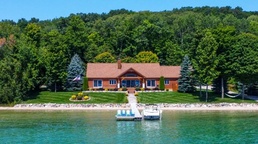
Summer Hot Spot: Median Sale Price for Area Homes Up 88 Percent Since 2019
Summer has long been the most active season for buying and selling real estate in northern Michigan. So, how was summer 2026… Read More >>
Donating Ahead of Cold Weather
Hard to believe, but winter is not that far away. Jubilee House, Traverse City’s only drop-in day shelter for adults e… Read More >>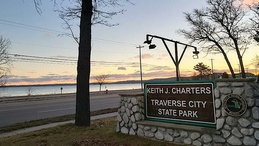
TC State Park Reopening in October
Construction work on the Keith J. Charters State Park in Traverse City is wrapping up early, according to the Michigan DNR, … Read More >>