Can a drug Cure a Drug
Nov. 30, 2005
A 40-year-old Traverse City native who was intensely addicted for two years to methamphetamine says he owes his life to ibogaine, an illegal and experimental drug that has helped hundreds of people break their drug or alcohol addiction.Aaron, not his real name, said meth nearly killed him. He lost 80 pounds, leaving him malnourished and sick. He also lost his house, his wife, and his catering business.
Aaron’s brother, desperate to get him off drugs, told him about the power of “plant teachers”-- mind-altering drugs that take you on a deeply spiritual trip, allowing a reset to your healthy psyche before life turned ugly.
For Aaron, who we reported on two weeks ago, that drug was ibogaine, a hallucinogenic. Thirty-six hours after taking it, he completely lost his craving for meth. He’s been clean for 90 days and is grateful for a second chance at living a healthy life and raising his infant daughter. He didn’t return phone calls for this article, so it isn’t clear how he’s doing now.
The science behind ibogaine is this: the drug, taken from an African plant, metabolizes in the body into noribogaine. This metabolite chemically stops a person’s addiction in its tracks. As an added bonus, the person doesn’t suffer withdrawal pains, but instead experiences a very long, light-filled trip through his life, Scrooge style. Those visions often help an addict unearth answers to his habit.
Ibogaine alone is no magic bullet. For a “honeymoon period” lasting anywhere from four weeks to 12 weeks, the person has no craving for drugs. But here’s the downside: once the noribogaine is washed out of the system, the deep craving for drugs may return.
LIFESTYLE CHOICE
There are no statistics for long-term success, but one thing is clear: some addicts miss their old lifestyle of gathering at a table everyday and shooting up with old friends. Drugs are the glue of these friendships and it’s hard to lose the glue. To succeed, the addict needs to attend support groups and make new, “clean” friends. Most importantly, the recovering addict has to learn how to cope with life’s emotional ups and downs without drugs and, for many, that’s very hard to do.
Many ex-addicts can overcome the craving. Others ask for a “booster” ibogaine treatment, although most are not crazy about the idea of repeating the 34-hour “trip.” For others, one treatment is enough.
So explains Dr. Deborah Mash, a neuro-scientist who has studied ibogaine for 14 years. She is an esteemed professor of neurology at the University of Miami School of Medicine. At first, this Harvard-educated scientist, her rapid speech peppered with scientific terminology, seems an odd advocate for a hallucinogenic, but she has absolute, unbridled enthusiasm.
“I was in a Washington airport last week and saw a severe alcoholic who was treated with ibogaine. She was there with her daughter and her family. She looked so good. It’s people like her that keeps me sane.
“I’m a scientist, and I’m not going to overstate these research findings. I don’t have the statistics. But what I can tell you today is that we have success stories, not one, not two, but hundreds of success stories. It’s very rare to have all this human data on an experimental drug. We know it works.”
ANTI-ADDICTION PROPERTIES
Mash said the drug has been successfully synthesized into noribogaine, which the liver makes from ibogaine. The drug retains the anti-addiction properties of ibogaine, but loses the hallucinogenic side effects. Dr. Stanley Glick of Albany Medical College also tested a synthetic derivative called 18-MC on rats in the late 1990s with promising results. Mash, who owns the patent on noribogaine, has a dream of giving addicts a noribogaine patch, which they could wear for a lifetime, if necessary.
Mash has not publicly presented her ibogaine data, but said it shows good results for those addicted to most opiates, inconsistent results for smokers, and “stunning” outcomes for alcoholics.
“It is not as impressive for crack cocaine, but we have success here, too. Most crack addicts require a second treatment when the cravings return. This probably reflects neuro-adaptations in the brain and underscores the need for noribogaine.”
You would think with the millions of dollars spent on the war on drugs, said Mash, that the government or a pharmaceutical company could put noribogaine in the arsenal.
The History of Ibogaine
Dig up the roots of the four-foot tall flowering African shrub called Tabernantha iboga and peel off the bark. You will have in your hand the source of ibogaine. Teenage tribal members in the country of Gabon chewed the bark as part of an initiation rite to manhood. (Mash has called the drug a chemical bar mitzvah.)
France found a way to purify ibogaine from the bark in the early 1900s and sold it in low doses from 1939 until 1970 to help with fatigue and depression.
Ibogaine made its mark here in the early 1960s, a time when LSD was gaining popularity and was surprisingly legal. Howard Lotsof, a 19-year-old heroin addict, and 20 of his friends routinely used drugs and systematically wrote down their experiences to compare them.
In 1962, a chemist friend gave Lotsof, a film student at the time, a dose of ibogaine. Lotsof was surprised after arriving back to reality that he had lost his addiction. So naturally Lotsof gave ibogaine to seven of his friends, all of who said they emerged from the experience with no desire for drugs. Five of them stayed off heroin for six months or longer, and the two who didn’t said they wanted to remain addicts.
Lotsof didn’t do much with his discovery until 20 years later at the age of 39. He was like an exploding star, going in many different directions to gain scientific interest, funding for animal studies, and legitimacy for this drug. He formed a nonprofit corporation to promote ibogaine, inspired interest with the National Institute on Drug Abuse, and successfully filed for patents to use ibogaine to treat a variety of addictions. He also formed a company, NDA International.
He found grant money for Glick at Albany Medical College, which did the initial animal work on ibogaine and has done significant animal research since then.
In 1989, Lotsof became involved in testing ibogaine on patients in the Netherlands (the beginning of an underground of addicts helping addicts). Dr. Mash, who heard a lecture on the drug and witnessed the remarkable recoveries in the Netherlands, became the next major proponent of ibogaine. She was able to get FDA approval for a Phase 1 clinical trial here in the United States. Her trial started in August 1993 and was intended to prove safety.
“The FDA was absolutely wonderful and highly supportive and interactive. We are academic investigators studying a highly controversial substance and they were caring, responsive, and helped guide the research for ibogaine. That was my experience.”
But the bright lights on the drug dimmed suddenly after a woman died in the Netherlands’ clinical trial in 1993. She went into respiratory collapse 19 hours after taking ibogaine. A Swiss woman also died after taking ibogaine for psychotherapy in Europe around the same time.
Animal studies were also showing problems, said Frank Vocci, the ibogaine point man for the National Institute on Drug Abuse (NIDA).
Cerebral lesions showed up in rats and monkeys suffered grand mal seizures. The drug also slows the heart rate in humans, which could mean death for some people. Another troubling aspect was theunpredictability of how the ibogaine would work in the body. Ibogaine turns into noribogaine in the body, and noribogaine is the chemical that stops the cravings. But ibogaine metabolizes into noribogaine at different rates for people; it depends on the person’s metabolism. “That means it is impossible to predict the ratio of ibogaine dosage to the amount of noribogaine producd in the body,” Vocci said.
The two deaths were seen as red flags and shut down the clinical study in the Netherlands. Mash was forced to end her clinical study here in the states. The money just dried up.
Pharmaceutical companies: No interest
Really since the beginning, pharma-ceutical companies were cool to ibogaine because they didn’t see it as a moneymaker. The drug naturally occurs in nature and its molecular structure cannot be patented. Only the drug’s use to treat addictions can be patented. And because it works after just one administration, the profit motive is thought to be low. Pharmaceutical companies have been unwilling to invest in a Phase II clinical trial running from $10 million to $30 million without having sole dibs on the drug.
But what about government funding?
When a drug carries significant benefit to public health, but isn’t deemed commercially viable, the government will often help. The National Institute on Drug Abuse did have an interest in conducting clinical trials, going so far as to map out plans for Phase I/II clinical trials in 1993. But in March 1995, following the ibogaine deaths, consultants weighed in and advised against doing the studies.
Despite these problems, Mash was determined not to give up. The rats in the Johns Hopkins study showing brain damage were fed extremely high doses with only a short reprieve, which doesn’t reflect real-life treatment. And in response to the monkeys’ seizures, she said that later studies on primates did not show any toxicity. Mash acknowledged that ibogaine could kill people, especially those with bad hearts and liver problems. The Swiss woman who died was “very sick with a very sick heart” and should never have been given ibogaine. It was originally suspected that the woman in the Netherlands study may have taken heroin with the ibogaine, but blood studies show she did not. She died from an accidental overdose, Mash said.
“A vast, uncontrolled experiment”
Mash said the problems with ibogaine put her in a Catch 22. Although she’s had FDA permission to proceed with ibogaine trials since 1995, money has been a problem. In order to find the funding she needed to prove ibogaine was effective, she first had to prove it was effective. So she set up a medical facility on the Caribbean Island of St. Kitts and began working in cooperation with an addiction treatment facility based in North Miami. Hundreds of addicts were treated, and hundreds were helped, although many ultimately relapsed, she said.
“The success rate depends on if they can work a program, it depends on their motivation. If they go to a traditional treatment center without ibogaine, the failure rate is 90%. With ibogaine, it’s 40 percent to 50 percent,” Mash said.
Mash stressed that no one should ever take ibogaine except under strict medical supervision. That doesn’t always happen, however.
In the United States, there is an underground network of ex-addicts who administer ibogaine and offer training to others on how to be a caregiver. The hotspots are New York City, Chicago, Miami and Portland and the ripple effects continue from there, said Dr. Nathen Gabriel, director of operations for the Ibogaine Association.
“These addicts have received benefits and want to bring it to the world at an extremely low cost whether it’s legal or not,” Gabriel said. “For them, it’s an ethical issue of saving someone’s life.”
But what about the risk of death? In fact, Gabriel said, there is a 1 percent risk of mortality in a mainstream detox center—about the same as for ibogaine. Scientists need a rigorous trial to figure out what is causing the deaths—ibogaine or withdrawal, he said.
“Part of the problem is that we don’t have organized research. Right now, it’s guesswork,” he said.
The Ibogaine Association treats about eight patients each month, transporting them from San Diego to Playas de Tijuana, Gabriel said.
Ibogaine clinics have also been set up in Panama City, Mexico, the Caribbean, the Netherlands, and even on cruise ships. Sometimes the clinics are connected to treatment centers based in the United States, but others—like the Ibogaine Association—focus only on the administration of ibogaine (and provide contact information for post treatment).
On St. Kitts Island where Mash oversaw a clinic for several years, patients are medically screened more stringently than other clinics and constantly monitored. (Mash is no longer connected to the St. Kitts facility and now serves as a consultant for Advanced Health Transitions in Cancun).
A key question that still must be answered, he said, is whether the hallucinogenic experience is necessary for recovery, said Lotsof, who now works as a consultant on ibogaine issues.
“Ibogaine is a vast, uncontrolled experiment being conducted around the world,” Lotsof said. “What we do know is that we can take an active drug user and interrupt their chemical addiction. Nothing else can do that. In a matter of a day, we can return a person to a pre-addiction state. But for how long is a different question, but really not important. Because if you know you can interrupt your addiction, then you know you can turn around your life.”
The Future of Ibogaine
Vocci of the National Institute of Drug Abuse has not seen the human data from subjects on St. Kitts Island, but said that a peer review committee would likely consider it seriously and part of an overall argument to merit further study.
Ibogaine did provide a “chemical lead” for breaking addiction, but it was not the final answer, Vocci said.
The best route for FDA approval, he said, would be to start with a small study. He liked Mash’s approach of synthesizing noribogaine because it may react in the body more predictably in than ibogaine. He also said that NIDA would consider funding a pilot, double-blinded study as a precursor to a large-scale clinical study.
Mash said she has animal data on noribogaine for “proof of concept”—the animals stopped using alcohol and cocaine. She has also found seed money for a Phase I study, which must prove safety. The Phase II study—to prove effectiveness--will be much more challenging because the cost runs into the millions of dollars; she urges people to apply public pressure on the government for funding (in other words, call your senator and representative).
“The drug abuse problem is getting bigger and bigger and bigger. We are poisoning generations of people. It’s huge. We need pharma to join in. We need someone to step up to the plate. If it was a stupid thing, it would die, but this will outlive me. I know that with every fabric in my body.”
Although Mash was never a drug addict, her motivation for getting ibogaine approved is also rooted in the personal.
“My father battled alcoholism until the day he died at age 56. He was a tender, kind, remarkable human being. This would have helped him. …
“It really debilitates me just thinking why we can’t get a pharmaceutical company to get on board. They don’t believe they can make enough money in the addiction market. They want a multi-billion dollar drug. So what have we got? A curiosity. We’ve got an underground of people who knows it works. We have already demonstrated efficacy and safety and we know we could help millions.
Editor’s Note: For more information, visit advancedhealthtransitions.net. The Ibogaine Association also screens patients and offers treatments for $3,900 (1-877-Iboga50).

Trending
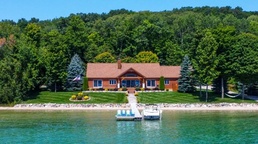
Summer Hot Spot: Median Sale Price for Area Homes Up 88 Percent Since 2019
Summer has long been the most active season for buying and selling real estate in northern Michigan. So, how was summer 2026… Read More >>
Donating Ahead of Cold Weather
Hard to believe, but winter is not that far away. Jubilee House, Traverse City’s only drop-in day shelter for adults e… Read More >>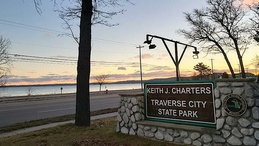
TC State Park Reopening in October
Construction work on the Keith J. Charters State Park in Traverse City is wrapping up early, according to the Michigan DNR, … Read More >>