Making the Right Choices
April 19, 2006
On the day of the first big melt in March, a glorious Boardman River afternoon, we spotted the bald eagles that nest in the backwaters of Sabin Dam. They rose out of the tops of the hemlock and cedar, and were close enough for a few moments to see the white feathers on their heads and tails. Then, with wings stretched like taut sails, they rode up on the wind and the thermals, one heading north, the other south, passing out of view.The first bald eagle I ever saw in the wild was in 1970, during a canoe trip on the upper Delaware River. It came up river at us, steadily stroking the air with huge black wings. This was the era before authorities banned the DDT insecticide that softened shells and killed raptors.
The rules worked. Eagles proliferated. I’ve seen them pluck salmon out of the dark blue waters of Alaska’s Prince William Sound, and soar over Mount Katahdin in Maine. I’ve encountered eagles on the Manistee River below Red Bridge, and watched them fly the icy coast of Sleeping Bear Dunes National Lakeshore.
My kinship with eagles is a tie, not in blood but in spirit, for these beautiful creatures and their wild places. In the 36th year I’ve celebrated Earth Day, I understand why some people may think that sounds daft. Sentiment about real things in a virtual world, after all, is not seen as a virtue.
But there’s nothing sentimental about the role the Boardman’s eagles play as an indicator of ecological health, or in how they stir my passion as a steward. For me, as for so many of my friends here, it’s personal.
This part of the Boardman River, which lies less than two miles from the Traverse City line and at the heart of one of the fastest growing metropolitan regions in the Midwest, is full of natural gifts. Beaver-gnawed stumps are as common along the shoreline as parking meters are in town. Fly fishermen seek this stretch of the river to land big brown trout. Naturalists say bear, fox, and otter are common.
LOGICAL OUTCOME
The river’s superb condition is not an accident. It is the logical outcome of a fortunate convergence of law, nature, activism, and northwest Michigan’s uncommon good sense. The eagles thrive because environmental laws were enforced, sound stewardship occurred, bad development proposals were defeated, pollution declined, and forests were conserved. Over the years, the organization I work for played a part in making sure that happened.
The idea that we ought to conserve rather than ruin the region’s natural resources has arrived just in time. The eight counties surrounding Traverse City were home to 249,000 residents at the end of 2004. That’s 12,611, and 5.3 percent more people just since 2000.
Along with the people has come a rush of new housing. In the four years after 2000, builders erected 10,648 single family homes in the eight-county region, according to the Northwest Michigan Council of Governments.
It’s understandable why so many people worry about numbers like these. But growth isn’t necessarily vexing. The flip side, of course, is the development of the region’s diverse and increasingly prosperous economy. Even with the lingering statewide recession, seasonal unemployment rates in the eight northwest Michigan counties around Traverse City are substantially lower than they were in the early 1990s. Poverty has declined.
THE RIGHT CHOICES
The important choice is how we arrange ourselves on the land. The very same principles and values that provide for the Boardman’s eagles are being applied to secure wild and human habitats in so many other places across northwest Michigan.
Acme Township citizens and elected leaders have been working hard for years to build a real town center on farm land instead of another unsightly, traffic-choked mall. Elmwood Township citizens are making a strong and useful case for conserving open space and being smarter about where new construction is located.
This Is Our Town, a Charlevoix citizen group, convinced Wal-Mart not to wreck their downtown economy with a new superstore, and then convinced two local governments to enact zoning measures that limit the size of retail markets. Manistee residents, the Little River Band, and government leaders replaced a proposal for a polluting coal-burning power plant with a regional clean, renewable energy plan that launches this year with a county-sponsored energy fair.
Downtown Traverse City – like Petoskey, Manistee, and Frankfort – is investing in new housing and rebuilding the civic vitality that was torn down for parking lots in the 1950s and 1960s. Benzie County citizens are voting this year to establish a new transit system. Republican Representative Howard Walker of Traverse City is proposing good legislation to conserve farmland rather than pave it over.
DEFEATING BAD IDEAS
The recent history of the Boardman River is another apt illustration of the trend. As far back as the 1980s, the very same stretch of the river that the eagles now cruise was viewed as a prime crossing spot for a five-lane highway and bridge. In the 1990s, the public forests upstream were targeted variously for public land sales, energy development, and increased timber cutting. At one point in the 1990s the Legislature and the governor seriously considered eliminating the 1970 state law that kept the Boardman River natural.
Regional citizen organizations stepped to the fore to beat back each and every one of these ideas. We didn’t just assert that environmental values were at stake. So were important economic ones. The design for the highway and bridge, for example, called for building a wall of dirt as tall as a forest across the entire valley.
But the really exciting part of the Boardman’s story is what’s coming. All sorts of unlikely allies have been working shoulder to shoulder for nearly two years on a new development and transportation strategy that responds to swift growth without wrecking this favorite place.
Northwest Michigan’s embrace of a cleaner, greener, and more prosperous way of life is unmistakable. It’s taken awhile, but we’ve finally come to understand that securing our natural geography comes first.
Keith Schneider, a writer and regular contributor to Northern Express, is the editor of the Michigan Land Use Institute, which he founded in Benzie County in 1995. Reach him at keith@mlui.org.

Trending
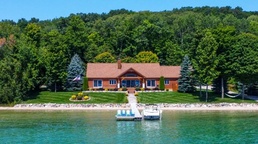
Summer Hot Spot: Median Sale Price for Area Homes Up 88 Percent Since 2019
Summer has long been the most active season for buying and selling real estate in northern Michigan. So, how was summer 2026… Read More >>
Donating Ahead of Cold Weather
Hard to believe, but winter is not that far away. Jubilee House, Traverse City’s only drop-in day shelter for adults e… Read More >>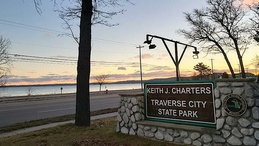
TC State Park Reopening in October
Construction work on the Keith J. Charters State Park in Traverse City is wrapping up early, according to the Michigan DNR, … Read More >>