Out of Petoskey... Into Africa
Sept. 13, 2006
Here’s what Susan Martin learned on her summer vacation:Camel burps stink.
If there’s an after-life, she has absolutely no interest in becoming a Masai woman.
Kilimanjaro translated means Mountain of Greatness or White Mountain.
But it could also mean Mountain of the Many Vomiters. (Actually writer Tom Dunkel came up with that little gem.)
But her biggest lesson was spiritual. We are connected to the Earth.
It sounds so obvious, it bears repeating. We …. are ….. connected …. to ….. the….. Earth.
Martin and four other women—three from the Petoskey area—just recently returned from Tanzania, where they hiked up 19,335.6 feet to reach the summit of Mount Kilimanjaro. (I wonder about that .6. Is mountain measurement really quite that precise?)
Martin, you may remember, was in the news back in 2001 when she and 11 other women decided to ski to the North Pole, where the women experienced dementia, incontinence and hypothermia.
Not satisfied with that level of intense personal suffering, they decided to climb up Mount Kilimanjaro where the landscape changes from a lush rainforest to fields of wildflowers and finally to a moonscape of black frosted rocks, glacier ice, and snow.
The trip is an outgrowth of the nonprofit, Women Explore, which Martin and fellow North Pole explorer Kerri Finlayson established three years ago. Its mission is to inspire teen girls to set academic and physical goals for themselves, and, of course, to achieve them. And, okay. Boys can be inspired too.
When the women aren’t climbing to the “roof of Africa,” they all have regular jobs. Martin, teaches eighth grade science in Boyne City.
Finlayson, 32, teaches anthropology and sociology at North Central Michigan College, and Angie Bradley, 31, a newbie to the group works for Town and Country Cedar Homes in Petoskey.
In early August, they flew to Tanzania and met up with the other two hikers on the trip: Robin Glownia, a network administrator from Kalamazoo, and Katie Jo Dhaseleer, a former student of Martin’s who lives in Hawaii.
Well, it’s mission accomplished. Fresh from Africa, Martin, Finlayson, and Bradley met up recently to talk about the trip.
Martin, the comic of the group, makes what they do sound so doable: “We want to show people that ordinary women can accomplish something extraordinary.”
Yeah, like the marathon she’s going to run with Finlayson next month.
And check out their bios on the website, www.womenexplore. org.
Here’s what it says about Martin, who is one year shy of 50: “When she’s not busy with her kids, Susan enjoys gardening, running, skiing, and biking, and occasionally dabbles in extreme endeavors, such as skydiving, rock climbing, whitewater rafting and this trip.”
Now there’s an ordinary woman for you.
Except that Martin and the others did start out as ordinary women, and it really was just their own two feet and friendship that brought them to this high-octane realm of experience and adventure.
Their first challenge was to get together and plot out the trip, which was made far easier with the Internet. They planned their chosen route up the mountain, and also the guide company. The route was non-technical—essentially, the only equipment they needed was a walking stick. They chose Shah Tours, in part, because they heard the company was reliable and the guides stressed safety; also the tour group was less expensive than those that “pamper” their clients. They also liked the fact that the guides and porters on the trip were natives and/or grew up in Tanzania.
The cost of the three-week trip, which included a safari, hotel, airfare, and the guided trip itself was about $5,800 for each woman.
The same, say, as therapy for a year or two, but with muscles to show for it.
The women knew their biggest challenge was not so much the hiking, but rather altitude sickness from the thinning atmosphere. The guides told them to take baby steps up the mountain, drink huge amounts of water, and to stretch out the upland journey to five days up in order to acclimate to the oxygen changes.
Those who push up faster than that usually don’t make it, and sometimes die (fluid gets into the lungs and/or brain or the thin air exacerbates a pre-existing condition). In fact, they learned that a 24-year-old woman died the same day they reached the summit—she had sat down to take a rest, and that’s all she wrote.
“We realized the mountain is much more powerful than we thought. It’s out of your control, completely out of your control,” Bradley said.
The trek started quite beautifully—warm, summer weather, a springy rainforest with chatty monkeys. Their difficulty was trying to walk slowly enough so they could acclimate to the thinning air. And, if they didn’t, the guides would chide, “Pole! Pole!” Which meant slowly, slowly.
They were dressed in summer clothes, naturally, and 10 porters carried their parkas mittens, tents, sleeping bags, and food—in duffle bags and on their heads, no less. They carried daypacks, that included lunches of boiled eggs, chicken wings, cucumbers, jelly sandwiches, and stale muffins.
Each day, after they’d reach their altitude goal and then hike down 1,500 feet to their tents, which the porters had set up for them in advance—they climbed high and slept low in order to acclimatize to the thinning oxygen. And in case you were wondering, there were pit toilets at the series of camps along the route. If the need arose between the camps, yes, the women responsibly left nothing behind.
After a couple of days, they left the dense rainforest behind, along with the rich oxygen. Altitude sickness struck most of them at one time or another.
“We were on the Shira Plateau , right before the full moon. I left the tent because I was sick and walked out into the beautiful night,” Martin wrote in her blog on the website, womenexplore.org. “Without sharing the details, I can say that my time on the Shira Plateau changed me. It made the rest of the trip seem easy. With Tums, Pepto Bismol and Excedrin, I was able to drag myself to the top with everyone else. More importantly, it didn’t matter to me whether or not I made it.”
On the fifth day, they arrived at camp around 5 p.m. and had dinner of fried bread (too stale, by now, to eat any other way), soup, potatoes, and sauce. The guide said to get some sleep. At midnight, he’d wake them for the last and most difficult push.
They had to hike from an altitude of 15,500 feet to 19,400 feet, and then descend down to 10,000 feet. They began walking at midnight and ended the trek at 6 p.m. the next evening. The reason: it was just too risky to stay at the high altitudes for very long.
Even with the baby step strategy, a couple of the trekkers began to suffer the pounding headaches, dizziness, and churning stomachs.
“At 15,500 feet, I felt fine—gosh this is okay,” Bradley said. “Then at 17,000 feet it hit me like a ton of bricks. I wanted to close my eyes and lay down.”
Instead, she threw up and threw up some more and felt much better.
The women hit a low point in the first early hours, before the sun came up. Bundled up in every piece of clothing they brought—and still cold—the journey up the switchbacks of small pebbles seemed endless.
They looked ahead at the boots in front of them and trudged, and trudged and trudged.
Then the guides—one at the head of the line, the other twp at the end—started singing in Swahili, a pleasant, mesmerizing kind of wail.
The songs lifted their spirits, and delivered them sanely to sunrise, one of the most spiritual moments of the trip.
They finally made it to a high ridge, Stella’s Point, and celebrated with a few tears and hugs from their guides.
“But, it wasn’t over,” Finlayson wrote in her blog. “The highest point of the mountain was still 45 minutes away. To me, this was the toughest part as I hadn’t felt sick from the altitude. At that point, I felt like stuff was going to come out of both ends. But, we just kept pushing and pushing until we made it to the famous sign that tells you that you made it to the highest point in Africa,”
Emotions were high—relief, exhilaration, tears and lots of hugs. The summit itself was a moonscape of rock and snow bathed in a rose glow from the sunrise. The air was thin with only half the normal oxygen, so they spent only 30 minutes before dutifully turning around. The trip straight down caused their knees to scream before reaching camp at 6 p.m.
After the mountain climb, the women returned to their hotel and played tourists, going on a safari and witnessing the oldest and largest wildebeast migration on earth. Three of the women returned home soon afterward, but the safari guide talked to Martin and Dhaseleer about taking a very different safari—a camel safari in Arusha National Park.
Really another entire story, Martin said they went into the depths of Africa—not in a four-wheel drive, but a Puegot, a four-door sedan, with their “guide,” who drove into the Arusha National Park in search of a Masai village.
“First it was a dirt road, then no road, then just washed out ruts.”
They drove for hours into what seemed nowhere. They were completely alone, nothing in sight, and seemingly lost. Just when Martin thought she might never see her eighth-graders again, a Masai villager found them, folded himself in the car, and directed them to the village. By this time, the ruts were so deep, they all shoveled in gravel just to keep the car going.
Martin and Dhaseleer spent some time in the village, getting a small glimpse of the culture, including a shaky camel ride that “you’d only want to do once in a lifetime.”
Martin said the women in the village work extremely hard, while it seemed the men don’t do much more than tell stories and herd camel. A Masai man marries up to seven women, and his wives do everything—prepare the food, care for the children, go to the market, make the clothing, everything. A wife may also be “asked” by her husband to have sex with a visitor—she actually has no choice.
“I’m going to put the Masai woman on my list as someone I don’t want to come back as,” Martin said.
Which leads the conversation back to women in America today, and the whole point of the women’s nonprofit,Women Explore.
“Women now have the right to vote, work, combine our lives with family and work as we see fit. Most people are not up in arms about equality like they once were in the 1960s and 1970s; discrimination is subtle, but it’s there. Women rarely make partner in law firms, there are few women CEOs, we still haven’t had a woman as president,” Finlayson said.
Martin, the only mom of the group, had this to add: “I think things will change only when people regard parenting as important as being a CEO. In a sense, women are hampered by their biology—men don’t have to work their schedules around labor and delivery or breastfeeding. We need to recognize the unique contributions of both sexes in order to level the playing field.”
Editor’s note: Check out the website, WomenExplore.org to if you’re interested in having a member of the trip give an inspirational speech. There’s also a curriculum on the website based on their trips to the North Pole and Mt. Kilimanjaro.

Trending
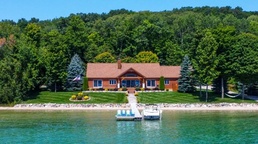
Summer Hot Spot: Median Sale Price for Area Homes Up 88 Percent Since 2019
Summer has long been the most active season for buying and selling real estate in northern Michigan. So, how was summer 2026… Read More >>
Donating Ahead of Cold Weather
Hard to believe, but winter is not that far away. Jubilee House, Traverse City’s only drop-in day shelter for adults e… Read More >>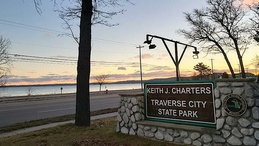
TC State Park Reopening in October
Construction work on the Keith J. Charters State Park in Traverse City is wrapping up early, according to the Michigan DNR, … Read More >>