Halloween around the world
Oct. 24, 2007
With the rabid marketing of hundreds of vinyl-and-nylon Halloween costumes, Halloween lawn ornaments, styrofoam faux gravestones, light up pumpkins and ghosts, trick-or-treatable candies, and endless choices for scary items to install upon your lawn, you’d think that America would be the place where Halloween is the most popular. But surprise - or should we say, boo! - you’d be wrong. It’s also, in certain countries, a much less frivolous holiday than you might think.HALLOWEEN IN THE SUMMER?
Actually most popular in the country in which it originated, Halloween in Ireland is a big deal. Also known as “Samhain Night,” Halloween was first celebrated by the Celts as the End of Summer, and it often took the form of a Festival of Fire in which giant bonfires were set up to ward off evil spirits. Today, the Irish version of Halloween is similar to the American version in some ways, and in others, not so much. In Ireland, children and adults alike both dress up, mostly as creatures from the underworld, and bonfires and fireworks are both a part of the holiday. There’s an Irish form of our trick-or-treating, where children go from door to door gathering candies, fruit, and nuts for the Halloween festivals; an old custom says that salt should be sprinkled in the childrens’ hair as they’re doing this to protect them from evil spirits. A traditional Halloween food in Ireland is Barnbrack, a kind of fruitcake that contains a wrapped treat inside that is said to foretell the eater’s future - for instance, a ring means the person might soon be wed, a piece of straw means that a prosperous year could be on the way. Pumpkin carving is alive and well in Ireland, too - plus they give equal artistic license to turnips, who are also bedecked with carved faces. Conveniently, many schools there have their mid-term break around Halloween week, which makes for extra celebration time; kids in the U.S. have to be content with Halloween night alone, which some communities will “move” if the holiday falls on a school night.
Scotland has a form of trick or treating, as well, called “Guising,” in which the kids perform skits, singing, or dancing in order to earn their treats or money, while the adults go to costume parties. And, in England, children often played small pranks on the adults; the pranking tradition has been limited in recent years, though, as modern times have led the kids to do more destructive “pranks” such as vandalism and street fires. Pumpkins are carved in England, too, and bobbing for apples is a much bigger tradition in the UK than it is in America. But although America developed many of its own Halloween traditions over time, including hayrides, haunted houses, and the viewing of scary movies, the start of it all still stems back to the Irish; the migration of the Irish to the U.S. following the Irish Potato Famine is what first brought Halloween to the U.S., and now many of those Halloween customs are expanding to other places.
COSTUMES OF ALL VARIETIES
And what to dress up as on Halloween? While the overseas costumes most often take the form of spooky figures - goblins, zombies, ghouls - it’s a free-for-all in America, where kids dress up as all kinds of cartoon creatures, characters from movies and TV shows, roleplaying characters such as vampires or wizards, even superheros or political figures. And while it seems like Halloween costumes and decorations have been available in stores forever, the commercialization of Halloween actually didn’t start in the U.S. until around the 20th century, with the Halloween postcards and paper decorations that were produced in the early 1900s. Mass-produced Halloween costumes weren’t actually available for purchase until the 1950s, which is when trick-or-treating first started to become a regular occurance; now, a whopping 93 percent of U.S. kids make trick-or-treating plans. In smaller towns, kids still go door-to-door, most often in their own neighborhood; but in bigger cities, there are often staged trick-or-treating events or candy events held in shopping centers or malls, to protect the kids from trouble.
SERIOUS AND SOULFUL
Although Halloween is a mostly fun holiday in America, there’s a serious tone underlying the holiday in the UK and Ireland, and in many other countries around the world. An old Celtic belief states that the souls of those who have passed on revisit the earth on October 31st, harking back to the holiday’s origins as the aforementioned Samhain. In Eastern Europe, Halloween is spent in prayer and time is taken to visit cemeteries; it is primarily a quiet day for reflection, and many Catholics attend mass on this day. In Italy, a similar holiday is celebrated on November 1st, where children go to sleep planning to awaken on November 2nd to find traditional sweets and toys “left” by their deceased relatives. In Germany, knives are hidden on Halloween night so as to avoid harm being caused to (or from) visiting spirits. Candles are lit in memory of dead relatives in Belgium, and, in Austria, some people will leave a lamp on next to a platter of bread and water, in order to welcome back dead souls; a similar approach is taken in Mexico, where altars are often set up with food to welcome the souls for a visit. Also in South America, the El Dia de los Muertos (Day of the Dead) begins the night of October 31st, continuing on November 1st with All Saints Day and on November 2nd with All Soul’s Day; these celebrations are considered by many South Americans to be the most important celebrations of the year, and the holidays are used to decorated the graves of family and friends who have passed away.
In other countries, Halloween is considered less serious, and is celebrated in a similar manner to how most of the U.S. celebrates it; it’s almost as popular in Canada as it is in the U.S., and is slowly catching on in places like Australia and South Africa, where, although it’s not an official holiday, many of the children participate in dressing up in costumes and being gifted with candy. And, in recent years, France has adopted some of the American Halloween activities, such as making and sharing chocolates and other candies, and visiting McDonald’s and Disneyland Paris; trick-or-treating, however, is rare in France, although costume parties are very popular. In France, the next day, November 1st, is reserved as a time to honor the dead; yet some people refuse to celebrate Halloween altogether, having decided to boycott it as the intrusion of an American holiday into the French culture.
ASIAN “HALLOWEEN”
Asian countries celebrate a form of Halloween, too. In China, what we know as Halloween is known as Teng Chieh, or “Ghost Festival,” and bonfires and lanterns are lit in order to light the paths of the spirits as they travel the earth on Halloween night; food and water are also placed in front of photographs of those who have departed. The Halloween celebration in Hong Kong is called Yue Lan (Festival of the Hungry Ghosts), and it is believed that spirits roam the world for 24 hours - therefore, many people in Hong Kong burn pictures of fruit or money at this time, in the belief that these images will then reach the spirit world and make the ghosts happier. Korea’s holiday that is similar to Halloween is called Chusok, of which the date is determined by the lunar month; this holiday is celebrated by families getting together for a meal, after which they get dressed up and visit the tombs of their ancestors, leaving offerings of rice and fruits to thank those ancestors for the hard work they did. And Japan celebrates the Obon Festival (also known as Matsuri or Urabon) which is similar to other Asian Halloween festivals in that it is also dedicated to the spirits of ancestors. Special foods are prepared, candles are lit and set afloat on rivers, and bright red lanterns are hung everywhere - but the big difference, much like the Celtic End of Summer celebration, is that the Obon Festival does not take place in the autumn, but in July or August.
It may be one of the world’s oldest holidays, but Halloween is becoming celebrated in more and more countries as time goes on, with an interesting range of approaches that range from religiously ritual to much more casual; but the common thread is that the holiday is symbolically associated with those who have passed on and with the supernatural, and it also remains also a special and unique way to mark the end of each year’s harvest season.
Trending

Summer Hot Spot: Median Sale Price for Area Homes Up 88 Percent Since 2019
Summer has long been the most active season for buying and selling real estate in northern Michigan. So, how was summer 2026… Read More >>
Donating Ahead of Cold Weather
Hard to believe, but winter is not that far away. Jubilee House, Traverse City’s only drop-in day shelter for adults e… Read More >>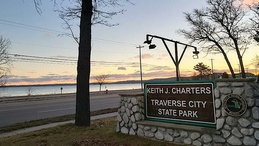
TC State Park Reopening in October
Construction work on the Keith J. Charters State Park in Traverse City is wrapping up early, according to the Michigan DNR, … Read More >>