The Future Of Bicycling
April 11, 2007
More friendly to the environment than cars or even motorcycles, more affordable for the average person, more compact, fuel-free, far better for road erosion, and easier to fix, bicycles are something to give serious consideration to in this time of environmental depression.Bikes are used as “beasts of burden” in both Asia and sub-Saharan Africa, as well as in many other parts of the world; but here in the U.S., they’re seen as more tools for recreation and fitness than anything else. This isn’t a bad thing, of course - bicycling is far healthier than the ineffective fast fixes of diet supplements, and far cheaper than the average health club membership (plus it gets you into the great outdoors) - but one has to consider, also, the benefits of the bicycle’s potentially expanding role in the coming years, as fuel prices rise, populations grow, and other resources become more scarce.
So how to improve the bicycle for the future, to make it more appealing to the masses? Well, there are plenty of projects underway to do just that. First of all, the bikes themselves are being improved almost by the day, as companies such as Trek, Cannondale, Mongoose, Giant, Kestrel, and Specialized are constantly working on such factors as lighter frames, better suspension, smoother gears, and more comfortable and visually-appealing yet speedy designs. Each year, these companies present new, sleek models of bikes that practically sell themselves.
LIGHTER & FASTER
A few new bikes of note for this year include Specialized’s Roubaix series, named after a 165 mile race across 500-year-old cobblestones, and a great bike for anyone who wants to ride long distances and higher speeds; Giant’s TCR and OCR models, with their amazing lightness and aerodynamics; the new Norco Team DH bike, with its slim frame and titanium-sprung suspension; Dynamic Bike’s chain-free bicycles, which enclose a shaft drive to make for human bike power with a twist; and, of course, the strange-looking but highly efficient recumbant bikes, which are offered by several different manufacturers, and which make a great bike option for touring and urban use, especially for the less physically-fit rider.
There are some exciting new hybrid models on the way, too, such as the Aerorider company’s Sunrider and Aerorider models, which look like futuristic sidecars, and are powered by human pedaling - and, in the Aerorider’s case, combine that muscle power with a small electric motor, giving it a top speed of 45 mph and the additional bonus of protection from the weather.
Of course, there are the occasional over-the-top moments - such as Specialized Bikes’ amazingly believable April Fools’ hoax, which presented the revolutionary (and nonexistant) “Venom Line” of bikes that everyone wanted and no one could get - but there are also plenty of realistic advances in bike design that are helping to make biking more appealing. This, of course, translates to more bicyclists on the roads - and hopefully, more room for them to bike.
TRANSGLIDE CORRIDORS
But is it enough to add bike lanes to existing roads, or should the roads themselves be reduced in lane size, making car travel less accessible and bicycle travel (along with commuter trains) more convenient by comparison? Or is there yet another way?
An idea that’s been in development for the past 10 years is that of the TransGlide system, a seemingly complex yet simple method of transporting people via bicycle in their own environment. The idea behind the TransGlide is that it would be its own transportation corridor, which would generally be aligned with major roadways. Within each TransGlide corridor, the air would be purposefully moved through the directionally-divided, above ground, transparent tunnel system in order to increase the efficiency of the bicyclists, allowing them to comfortably ride at speeds of around 25 miles an hour through otherwise cluttered urban areas. With the tunnels reportedly low-cost to construct, and the rest provided by the consumer, it’s an interesting solution that just might work.
However we approach it, it’s time for the U.S. to catch up to many of the other parts of the world when it comes to eschewing our cars and finding other efficient methods of transportation - and bicycling is a great way to start.

Trending
Summer Hot Spot: Median Sale Price for Area Homes Up 88 Percent Since 2019
Summer has long been the most active season for buying and selling real estate in northern Michigan. So, how was summer 2026… Read More >>
Donating Ahead of Cold Weather
Hard to believe, but winter is not that far away. Jubilee House, Traverse City’s only drop-in day shelter for adults e… Read More >>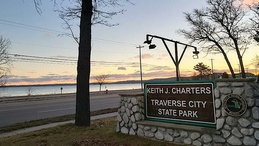
TC State Park Reopening in October
Construction work on the Keith J. Charters State Park in Traverse City is wrapping up early, according to the Michigan DNR, … Read More >>