Different war, same situation
Sept. 12, 2010
Different War, Same Situation: New roads bring a slow sense of progress to AfghanistanBy Ted Rall
TALOQAN, AFGHANISTAN--Nine years ago, when I was using this provincial
Afghan capital as a base to cover the battle of Kunduz, Taloqan was a
dangerous place with medieval charm. Donkey carts and horse-drawn
carriages, their steeds decked out with red pom-poms, plied muddy ruts
that passed as roads. The only motorized transport belonged to Western
NGOs. Commerce consisted of a few sad huts you’d recognize as
primitive convenience stores and an outdoor bazaar where 90 percent of
economic activity was attributable to sales of opium paste.
In 2001 I wrote that good roads would change everything. And they
have. Some time after 2005, when The New York Times reported that the
U.S. hadn’t laid an inch of pavement in the entire country, road
building happened--at least here in Takhar and in neighboring Kunduz
province.
It’s impressive. Based on my 2001 experience and the absence of media
reports that anything had changed, I had budgeted three to four days
to travel from the Tajik border to Taloqan. Cruising down smooth
two-lane highways at 80-plus mph--Afghan drivers apparently had a
long-repressed need for speed--we made it in half an afternoon. Towers
for high-tension conduits (the wires haven’t been strung yet) line the
road, promising an electrified future.
TRAFFIC JAMS
The ghosts of ‘01 are here--burned-out armored personnel carriers,
lumps of earth where villages stood, tank treads used as speed
bumps--but hard to find. Khanabad, the blood-soaked eastern front line
during the battle of Kunduz, where my fellow journalist had the skin
torn off his body by Taliban POWs using their bare hands, is a farm
community marked by the kind of green-and-white reflectorized sign
you’d see in the Midwest.
Most of Taloqan is paved. The donkeys and horses are gone. The
soccer field used by the Taliban for stonings and by a Northern
Alliance warlord as a helicopter landing pad is filled with kids
playing on green grass. There are traffic jams (of cars and
Indian-style motorized rickshaws) and white-gloved traffic cops to
direct the mayhem. Business is booming. America is finished, but
Taloqan is looking good.
Asphalt made a difference. But the basics--the social and political
situation that in December 2001 prompted me to declare the U.S.
occupation of Afghanistan doomed--remain the same.
STILL HERE
Time magazine recently declared that the Taliban would sweep back into
power after a U.S. withdrawal, brutalizing them and stuffing them back
under burqas. But the Taliban never left. Neither did the repression.
In Taloqan every woman but one wore the burqa, turning her head away
so we couldn’t see her eyes through the netting as we passed.
Where are the Taliban? “They are all around us,” said my driver’s
cousin, the campaign manager for a Canadian-Afghan actor running for
parliament next month. “During the day, it is OK. They come at night.”
Indeed they do. The week before our arrival they stormed a small NATO
garrison staffed by German troops at the airport here, killing seven.
Cellphone signals go dead at night in deference to Taliban strictures.
In 2001 I stayed with a pharmacist in the center of town, across the
street from the Red Crescent. Now Afghans are strictly prohibited from
receiving foreigners as overnight guests. Only one hotel, the gaudy
Ariana Hotel and Wedding Banquet Hall, can accommodate non-Afghans.
“The situation in Taloqan is not good,” continued the campaign
manager. “At night.”
We have the Ariana entirely to ourselves. Compared to the Spartan
conditions we endured nine years ago--bed lice, outhouse guarded by a
mean rooster--it’s a palace. Air conditioning, real beds, no parasitic
bites as far as I can tell. There’s a generator to supplement the four
hours a day of electricity supplied to the city.
But it’s a gilded cage, one surrounded by high walls topped with
barbed wire and guarded by a caffeinated man brandishing an AK-47. We
can’t go out at night, and neither do most Afghans. There’s more
prosperity. But it’s even less safe.
Money is exchanging hands. But the one thing Afghans wanted most in
2001--security--remains elusive. Though it is not a historical
novelty, it is ironic that people are turning to those who create the
threat in order to resolve it.
Ted Rall’s most recent book is “Wake Up, You’re Liberal! How We Can
Take America Back from the Right” (Soft Skull Press).

Trending
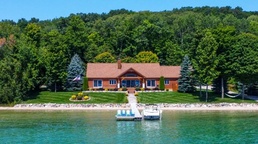
Summer Hot Spot: Median Sale Price for Area Homes Up 88 Percent Since 2019
Summer has long been the most active season for buying and selling real estate in northern Michigan. So, how was summer 2026… Read More >>
Donating Ahead of Cold Weather
Hard to believe, but winter is not that far away. Jubilee House, Traverse City’s only drop-in day shelter for adults e… Read More >>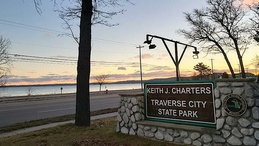
TC State Park Reopening in October
Construction work on the Keith J. Charters State Park in Traverse City is wrapping up early, according to the Michigan DNR, … Read More >>