
“Danish Girl”
Author David Ebershoff Visits National Writers Series
April 29, 2016
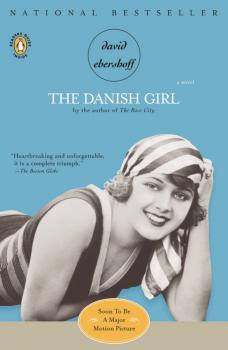
David Ebershoff, one of today’s most successful novelists and author of "The Danish Girl," visits the National Writers Series in Traverse City May 12.
A masterful study of conflicted sexual identity and the many forms love can take, "The Danish Girl" explores the lives of Danish landscape painter Einar Wegener (1882–1931) and his wife, the artist Gerda Gottlieb (1886–1940). The novel also served as the basis for the award-winning feature film by the same name.
Ebershoff sticks to the basic historical arc of Einar and Gerda’s lives together: marriage, careers and Einar’s gradual realization that his psychic and physical suffering came from being a woman trapped in a man’s body. For background, Ebershoff studied newspaper accounts, Einar’s autobiography ("Man into Woman") and Gerda’s paintings, especially those inspired by Lili Elbe, as Einar was later called.
Ebershoff ’s stated goal as a novelist is to recreate the "emotional truth" he thinks might have existed between these two unique characters. He imagines their lives as they struggle haltingly and – at times – awkwardly to free themselves from bourgeois social norms. They move from Copenhagen to Paris to find more freedom; Lili visits a clinic in Dresden; fame comes and goes. We watch, fascinated, as Einar fades and an ever-more confident Lili gradually emerges. It is this long transition that propels the story.
For years, Einar was an alien to himself, inhabiting a body he barely understood, but gradually, he realizes he is not alone. There are others. That knowledge, plus his own strong will, emboldens him to undergo one of the earliest known gender reassignment surgeries. Ebershoff reflects on the courage it must have taken to create what, today, we would call an "authentic" life, but he does not lionize Einar for it.
"I understand the impulse to"¦define her story as one of undiluted triumph, but her story is more complex than that," he stated.
Then there is the question of the marriage. An explanation is due here. Ebershoff replaces the historical Gerda, a Dane, with the character of a free-thinking American artist he names Greta Waud. Greta is committed to a life that defies bourgeois norms of the day. She wants a partner, for example, "who would take her someplace unlike where she’d ever been."
In ways she might never have imagined, she found just that. Instead of falling apart, the marriage takes on a different and, in certain ways, more intense, form. On other levels, the distance between them grows. Through it all, Greta never fails to be of interest because what Ebershoff has written is her "unusual combination of independence and fidelity."
Early on, Greta intuits her husband’s turmoil. She lends her full support, asking in return only to use Lili as an artistic muse.
Lili describes this act of love. "Out of nowhere came Lili. Yes, thanks were due to Greta."
"The Danish Girl" raises intriguing questions:
Where does Einar find the courage to become Lili? By the same token, could a Greta really exist – a person of seemingly bottomless empathy? Jumping forward nearly 100 years to the current debates over bathroom laws and other signs of cultural fear, have we become more understanding of transgender life? How many transgender people today experience the empathy shown by Lili’s inner circle?
These are all unanswered questions, but they are fuel aplenty for a compelling read.
"It’s important to remember that Lili and Greta were pioneers," Ebershoff told the Northern Express. "They had no role models to follow, nothing in the media, no examples to refer to. So they sometimes made mistakes, as we all would. They were searching."
For all their courage, Greta and Lili also experience moments of uncertainty, and those can be pretty funny, as when Greta reflects, "Oh, jeepers, the last thing I want to do right now is dine with my husband dressed up as a girl" or when Ebershoff describes Lili’s insecurities: "[Her]"¦ notion of herself could flip-flop nearly by the minute. Sometimes she looked in the mirror and exhaled and felt the settling peace of gratitude; other times she saw a man-woman, its head peering out of the collar of a dress."
From start to finish, Ebershoff challenges his characters (and, by extension, his readers) to overcome the social strictures and fear of the unknown that stand in the way of an authentic life. This profound, yet simple, theme draws us into "The Danish Girl," but is also used to great effect in "The 19th Wife," Ebershoff ’s novel about historic and modern characters swept up in religion-inspired polygamy.
"With each story, we understand more about each other. That’s why we read fiction and non-fiction – to learn about people who are different than us, to learn something new and feel astonishment," Ebershoff said. "And I’m not just talking about meeting a trans man or woman."
Ebershoff ’s sharply-drawn characters face off against tremendous odds, whether in the form of Einar/Lili’s internal battles against her own body’s demands, Greta’s unfailing dedication to help free her husband or, in 1800’s America, an articulate young woman’s rebellion against a life of servitude to Mormon leader Brigham Young ("The 19th Wife").
Even if a reader’s own struggles are very different, Ebershoff makes us care about these characters and their difficult journeys.
"I certainly hope so," Ebershoff said. "A book can touch people in different ways."
He called Lili’s example "bigger than her own life," adding, "maybe she can help expand the minds of readers."
Readers have reason to hope that Ebershoff ’s literary output might accelerate in coming years. After nearly two decades as an editor at Random House, he recently committed to writing full time. Originally, editing was simply a means to pay his way in the world, but, from the start, he distinguished himself. One of his early clients was Norman Mailer. He parlayed an internship at Random House into a full-time gig, then went on to became the company’s vice president and executive editor. Those years editing were hardly wasted. He edited 20 New York Times bestsellers and 3 Pulitzer Prize winners.
"It allowed me to engage with some very original minds – people who saw the world uniquely and knew how to write about it whether [through] fiction or non-fiction," he said. "Getting that level of intimacy with writers, that’s rare and very intense."
He described editing as "representing readers" while manuscripts move toward publication. That perspective, it could be argued, might explain his skill at engaging readers.
"The greatest thing a writer can hear is a reader gets emotionally involved in a story, that they have a real response," he said. "It’s what we’re trying to achieve as writers."
The thing to remember, he said, is that, in the final analysis, "the writer always gets the last word."
In addition to "The Danish Girl" and "The 19th Wife," which was made into a television movie, Ebershoff wrote "Pasadena," a bestseller about his hometown.
David Ebershoff will join the National Writers Series at the City Opera House in Traverse City on Thursday, May 12 at 8pm. For tickets and information, visit cityoperahouse.org or call (231) 941-8082.

Trending

Summer Hot Spot: Median Sale Price for Area Homes Up 88 Percent Since 2019
Summer has long been the most active season for buying and selling real estate in northern Michigan. So, how was summer 2026… Read More >>
Donating Ahead of Cold Weather
Hard to believe, but winter is not that far away. Jubilee House, Traverse City’s only drop-in day shelter for adults e… Read More >>
TC State Park Reopening in October
Construction work on the Keith J. Charters State Park in Traverse City is wrapping up early, according to the Michigan DNR, … Read More >>