“They Don’t Want To Back Us Up When We Come Home”
Nov. 4, 2016
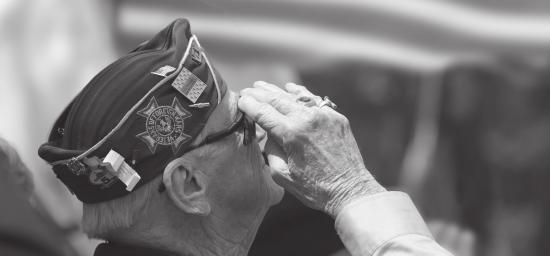
The Northern Express talked with three generations of soldiers and learned that northern Michigan is a relatively good place to be a veteran, but it’s never been harder for veterans to return from war.
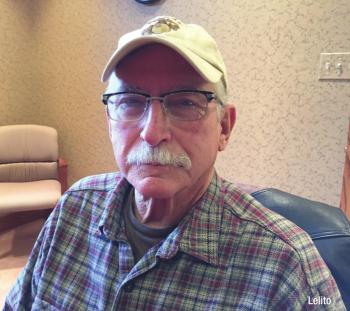
Three soldiers sat down with the Northern Express over donuts and coffee to talk about what it’s like to be a vet in northern Michigan. The men span three generations, but they echoed one sentiment: Today’s new vets have it tougher than ever, and there should be more support for them when they return home.
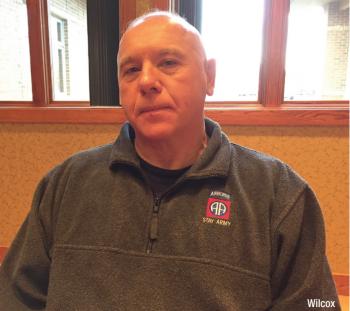
The Express talked to Richard Rizzio, born in 1925, an Army vet who served in World War II and fought in the Battle of the Bulge; Larry Lelito, born in 1946, a Marine Corps vet who saw 13 months of combat in Vietnam; and Martin Wilcox, born in 1960, a retired Army Ranger who served in Iraq and Afghanistan.
Northern Express: Two years ago the Department of Veterans Affairs was rocked by scandals. Its leaders vowed to reform and improve the delivery of health care. How is that going?
Larry Lelito: I think they’re going great, around here.
Martin Wilcox: Definitely. Around here. Especially the Traverse City area.
Lelito: I spent the winter in Phoenix, and it’s not as good out there as it is here. They have more problems.
Richard Rizzio: They’re trying to get the “choice” program going, and it’s not going very good, but they’re working on it. This is where, if you need medical help, and it’s farther than 40 miles, you can go to another doctor.
Wilcox: Or, if you’ve been on a waiting list for a period of time, you can see a civilian doctor.
Rizzio: They’re working on it. Overall, we don’t get near the complaints or the problems we hear from down below. In fact, everybody seems to be happy with the situation here.
Express: You all sound pretty positive about northern Michigan. It’s a good place to be a veteran?
Wilcox: This area is more friendly toward veterans. I got to go to a lot of places, visit a lot of different communities, and people are not always there for the veterans. I can say, this area up here — Traverse City, Kingsley — they’re there for the veterans. They help out a lot. It makes a difference to a lot of veterans. The community up here, it’s not a military town, but the patriotism for the vets is there. Anywhere they go, if they see you are a vet, they acknowledge you.
Lelito: I’ll tell you something, when I got back from Vietnam, one of my jobs was traveling around the United States, setting up an honor guard for people that were killed over there. And also I was an MP — I would go and pick up guys that went AWOL. So I got to see what was going on around the United States and the view of Vietnam veterans, which was very, very poor. A lot of times you couldn’t wear your uniform because you were advised not to in certain cities. I visited Traverse City when I was still in the service. Never been here before. And I came here, and I was welcomed, and there was no bias or anybody against the war or anything. Everybody just treated me normal. That was 1969. And I thought, after traveling around the United States and seeing all the things I’d seen, I thought, I’m coming to Traverse City, and that’s where I’m going to live.
Express: What do you think are the biggest challenges nowadays for the younger vets, either in northern Michigan or in general? Lelito: One big problem is these vets that are coming back from these wars — and I could say this for any war — they need a rest period. They need a period to regroup, not have bills coming in, and just to find themselves and take a year, or maybe more if they need it, and be supported by our community and our government. Not to have to go out and find jobs, but to take care of their families, get reorganized into civilian life. But no. The way it is, is, you get discharged, you have to go to work. You have to find a job.
Wilcox: You hit it on the head. You need that transition period. When you’re coming back, especially when you served in-country, you get in a mindset, and it’s a nasty world where you’re at. And when you come back, you’ve still got a lot of those thoughts going through your head.
Rizzio: Yeah. It takes a long time to clear.
Wilcox: I’ll give you an example. When I first got back to the states, I was driving a car, I was always wondering, “Wow, is there an IED [improvised explosive device] up there or what?” You’re just having thoughts of what was going on when you just left. And you need that transition period to readjust to civilian life.
Rizzio: There’s a big difference between the guys coming home today and the guys coming home when I did. I really don’t believe we had anywhere near the pressures coming out of World War II. Instead of post-traumatic stress, it was battle fatigue or combat fatigue, but the toughest part of coming back then was that thousands and thousands and thousands were coming back. And jobs just weren’t there. So you took whatever job you could. But I see what they guys are going through today, and I tell you, I had it easy compared to what they’re doing.
Express: What would you propose? A mandatory rest period?
Lelito: The veterans’ office here can look at your record book and make a diagnosis real fast. Anybody that has been in combat and has shed blood for their country automatically deserves top priority. And anybody that went off to serve their country, not necessarily in combat, but in a foreign land, they need top priority also. They need to be cared for, they need to be taken care of, and they need that rest period. When I got back from Vietnam, I got dumped off by myself. I didn’t come back with a group of guys. And I had $300 to make it back to Traverse City, where I wanted to live. And I still smelled like the jungle and gunpowder. I was a scout sniper. I was in combat for 13 months. And there was no rest period. No nothing. And you need that. You can’t just come out of that scene there, where there’s death all around you for 13 months and then come back to civilian life. You just can’t. It’s hard.
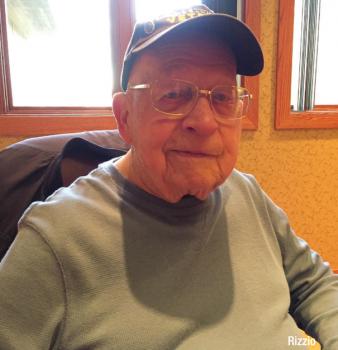
Rizzio: You know, the big difference between the guys coming back today, and Vietnam guys, too, and us, back in World War II — we knew who the enemy was. We knew the good guys. We knew the bad guys. The regular army, the Wehrmacht, they wore green uniforms. The bad guys were in the black uniforms — the SS troopers. They were the real tough ones. What am I getting at? We knew basically what was going on and what we had to do. I look at the guys coming back today, and I’m thinking, “My God, they know who they’re fighting, but they can’t identify them. They don’t know what’s going on until the damn bomb goes off or some idiot fires out of nowhere.” So this is why I think they’re having so much brain trouble. All this tension of wondering. I wouldn’t want to be there today. There’s absolutely no way I would go. To have to go through that pressure, not knowing who’s the bad guy? Is he the bad guy? Is he the bad guy? And all of a sudden you’re bombed. And now these guys have to come back and live a normal life, with all that pressure. That’s why we’re having so much trouble. You call that a war? It’s a war, but it’s hell to put the guys through that.
Lelito: You come back a different person. You’re not the same as before you left. Your spirit has been broken, and you’re a new person.
Lelito is a mentor at the Peace Ranch, south of Traverse City, where veterans can spend therapeutic time with horses. Lelito believes this is transformational.
Lelito: A big help for people that are suffering from combat stress is being around other vets that have been through the same thing, because you can hold each other up, you can give each other knowledge. You take a group of veterans in a therapy group, whether it’s Peace Ranch or through the VA, you start to bond, and you get to know each other, and you bounce off one another. When one guy needs information, we brainstorm it. With that amount of brain power and with that many guys that have had situations, somebody’s bound to have an answer to your question.
All three veterans agreed that despite the relatively good conditions for veterans in northern Michigan, the VA on a national level doesn’t do enough for veterans who are returning from seemingly endless conflicts in Iraq and Afghanistan. They are angry more isn’t being done to combat the struggles that veterans encounter finding jobs when they return to civilian life. They are outraged at the rate of suicide among veterans from Iraq and Afghanistan.
Wilcox: Right now you have an all-volunteer military. If you don’t have people that are going to serve willingly, the draft will come back.
Rizzio: And what incentive is there for them to go in when they see this kind of stuff? They’re coming back with brain injuries more than ever before. They’re coming back, having trouble getting jobs. Case in point — I’m not going to mention the person’s name, very close friend of mine, I know her well. [She has] two sons, both in Afghanistan. One of them comes back, he’s perfectly normal. The other guy’s a bloody mess. He can’t come out of it. It’s the way different people react to what they go through. I think you’d be nuts to go in today. I wouldn’t. And you’re not going to call me a coward. I went through nine months of straight combat. I’m highly decorated. It’s a tough call for the guys today, a very tough call. What’s the answer to it?
Lelito: The answer is to treat the veterans better. It’s simple.
Rizzio: We understand this. But the public, the government, the press — how do you get to this? It’s got to come from the top. Our VA is a nightmare as far as I’m concerned. Not here in Traverse City, but overall.
Lelito: The veterans themselves need to raise hell. That’s what Vietnam veterans did. It was a stigma, and we weren’t going to put up with it. We fought ’em and won. There’s 5,000 of us that got together and formed a class action lawsuit over this Agent Orange thing, and we won, and it got things rolling. Now these people coming back, they need to fight. They need to get things straightened out in our government or become part of the government, whatever it takes. One thing I’ve noticed, these troops coming back that have seen intense combat, they’re so stunned. They are stunned. They can’t fit in. They need us to take care of them.
Lelito believes the government should start a program that would take some of the veterans who have not been negatively impacted by combat, train them and employ them to take care of veterans who are suffering from combat stress. That would provide more employment for vets and offer another layer of help.
Express: You believe that veterans today face tougher challenges than ever.
Rizzio: This situation we’re going through now, with what’s going on over there, it’s not going to end tomorrow. I hope I am wrong. But I can see this thing going on and on and on, the way we’re doing it. It’s not the kind of wars we’re used to fighting, where you get in and you stop ’em. And all these guys are coming back with that same feeling, with the pressure, the mind problems. Somebody’s got to straighten this out.
Lelito: These vets are struggling much more than even I would say the Vietnam veterans that were stigmatized when they got back. These reserve guys that have served four or five tours of duty in a foreign country, their families are broke up, their jobs are broke. They joined the National Guard as pretty much a weekend warrior or whatever. Well, they get deployed, they go over to Iraq, Afghanistan, wherever it might be. They serve their time, they come back, their job is still there. Normally their family is still there. They get deployed a second time. Then they come back and their boss [says], “Geez, this is the second time,” and the wife is distraught, and the kids don’t know their dad like they should. Third time’s a breaker. It’s a job-breaker, a family-breaker, a life-breaker. Everything goes haywire then for them. If they’re lucky enough to have things together and then go on a fourth or fifth deployment, which is not uncommon, their life is destroyed. It’s just the way it is. And I see it over and over and over again. And that’s wrong.
Wilcox: It’s one of the issues that’s going on right now, you can watch it on the news. You got troops in there, in combat situations, right now, that are taking fire, they’re in bad areas. But is our nation calling it a combat zone? No, they’re not. They’re not even calling it a police action. You watch the news — you’ll see soldiers from the 101st right now, over in Iraq, fighting. All right? They are taking fire. In fact, we just lost one, a guy from the Navy. But the current government is not calling it combat.
Rizzio: It comes down to one thing. They want us to go in the service, men and women. They want us to go in, without any argument, but they don’t want to back us up when we come home. In other words, we can go in, that’s OK — they want guys to keep on volunteering to go in. But the care is not there when we come home. Not so much back in my day, but now. They’re not being looked after. They’re not getting the backup they should get.


Trending

Summer Hot Spot: Median Sale Price for Area Homes Up 88 Percent Since 2019
Summer has long been the most active season for buying and selling real estate in northern Michigan. So, how was summer 2026… Read More >>
Donating Ahead of Cold Weather
Hard to believe, but winter is not that far away. Jubilee House, Traverse City’s only drop-in day shelter for adults e… Read More >>
TC State Park Reopening in October
Construction work on the Keith J. Charters State Park in Traverse City is wrapping up early, according to the Michigan DNR, … Read More >>