What Does the Political Landscape Look Like to Teens?
How disrespectful rhetoric, social media, and anti-immigrant attitudes affect up-and-coming voters
By Aubrey Lawless | March 14, 2026
Editor's Note: This is a student journalism piece from our 2026 Voices of the Next Generation issue.
When I was in elementary school, I remember being proud to call myself an American, thinking that our government was strong, dignified, and honest, no matter who was in charge.
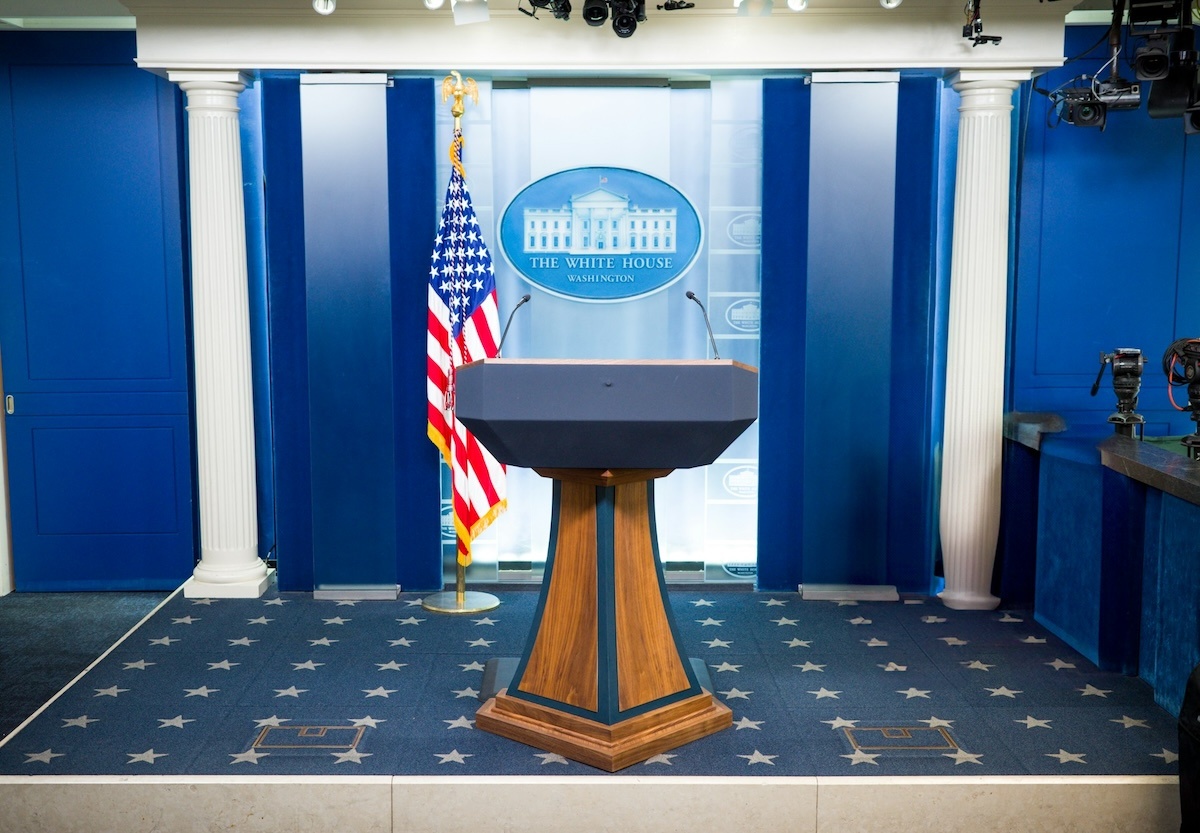
Now, every time I open my phone, I am disgusted by each new post from the White House: memes glorifying murder and racism, inflammatory speech targeted at its very own citizens, and overwhelming misinformation.
The language coming from our politicians feels like a disgrace to the words that I once uttered with pride at the toll of every morning school bell. Where does “liberty and justice for all” have a place in a society so willing to tear apart the fabric of its very own democracy?
It would appear that this fear-mongering and violent or derisive speech is a feature of politics now rather than a bug. That is to say, politicians are intentionally choosing this type of language in favor of more measured, professional, or respectful speech to get voter support or social media likes.
As my classmates and I head toward the polls this November and beyond, the tactics of our politicians will affect adolescent voting habits and overall political efficacy. So I set out to learn how the shifting landscape of politics affects future voters.
The Language of Politics
From a young age, children are taught to watch our language and that our words matter. But today, we see people in the highest offices of our government diverge from the basic principles of respect and democracy that are normally presented in a governing body.
Language has the capacity to completely change the political climate. For young voters today, extreme party polarization, constant threats of impeachment, and political memes are the norm. It’s also “normal” to hear a sitting president say he hates his constituents.
Trump stating “I hate my opponent and I don’t want the best for them” at Charlie Kirk’s funeral or threatening to arrest Democratic lawmakers on Truth Social posts is a vast departure from previous disagreements between parties.
This new rhetoric is a far cry from the very premise of unity in Biden’s inaugural address, in which he stated, “We can see each other not as adversaries, but as neighbors. We can treat each other with dignity and respect.”
Threats of a third term, an act that would have our government’s founders rolling in their graves, have circulated online, adding another degree of separation from our government’s core values. In a recent “In Pursuit” article, former president George W. Bush says of the country’s first president, “Washington modeled what it means to put the good of the nation over self-interest and selfish ambition,” referring to the selflessness required to be in a position of power that we don’t often see in contemporary society.
Young people are noticing that the language of their political elders has changed…and they’re coming up with solutions.
“I think the first steps in [healing the] political divide are finding shared ground and holding onto compassion. Especially in our current state, we need to make a point to be kind to one another,” says Central High School senior Bridget Belden.
“Being a part of the solution means standing up despite the fact that you may face backlash or criticism, but it also requires respect and courtesy from everyone,” Belden adds. “It’s imperative that people begin recognizing the basic fact that we all are the same at the end of the day, and we can’t lose our humanity because our politicians are manipulating us into thinking it’s okay to do so.”
Following the Leaders
Human brains aren’t fully developed until around our mid-20s according to the National Institute of Health, meaning that teens and young adults have more malleable, susceptible minds that are continuing to be molded by our environment.
A significant portion of our lives is spent listening and looking up to authority figures, which in turn tailors our own behavior. This becomes consequential when we begin to see patterns of hate speech and increasingly violent language from individuals we are supposed to regard as role models, and that behavior can begin seeping subconsciously into our own way of speaking and thinking.
In a political sense, this means that when one party member starts to say atrocious things, the rest fall like dominoes.
According to an article entitled “The rise of vice-signalling: how hatred poisoned politics” published in The Guardian earlier this year, “Every time open misogyny is voiced by a politician with no consequence except more attention, it emboldens his allies.”
Whether the topic is misogyny, racism, homophobia, or another form of hate, allowing even one political figure to begin to act inappropriately opens the door not only for teens to act this way, but fellow leaders of our country, normalizing hatred.
“Watching our nation fall apart like this is absolutely agonizing. The fact that we have politicians posting racist AI memes and groups on either side threatening horrible violence is obscene,” Belden says. “Our country is completely rejecting the basis of what the United States is, which is a nation built from immigrants.”
But Belden remains clear-eyed and specifically doesn’t let anti-immigrant rhetoric distract from what she knows to be true about her country. “The U.S. is called the melting pot for a reason, and I think it’s imperative we remember why our differences make us so strong. The gaping divide between people politically is going to ruin any social, scientific, and global growth that we can ever dream of making. If we want to grow into a strong and lasting nation, we need to remember the importance of our differences,” Belden says.
The Dangers Online
In such a polarized world, it’s easy to feel completely isolated at times, especially as a teen. This is where the internet comes into play. The internet has a miraculous capacity to connect everyone and everything across the globe, yet manipulated algorithms often skew what we are presented with online.
Social media provides teens and adults alike with tailored information meant to boost their own beliefs, potentially sacrificing truth and integrity in the process.
“Social media and the internet has the benefit of making information and politics more accessible. However, accessibility comes with more misinformation and political manipulation,” Central High School senior and member of the local chapter of the Democratic Socialists of America Arthur Lijewski-Lee says.
Another form of media manipulation is disinformation—when a person or corporation actively skews the truth to promote a desired narrative. We see this often incorporated into political manipulation, where partisan supporters are encouraged to act as influencers to spread and endorse falsified news.
An article in the Oxford Report titled “Social media manipulation by political actors an industrial scale problem” says “the level of social media manipulation has soared, with governments and political parties spending millions on private sector ‘cyber troops’, who drown out other voices on social media.”
Social platforms pave the way for rumors to spread like wildfire. In the real world, if one person makes a claim, it is likely it will only spread to a handful of people. But on social media? We’re talking about thousands or millions of people all over the world. And even when false statements do get caught, any effort to recall what was said is futile: the damage is already done.
According to the article “How and why does misinformation spread?” published in the American Psychological Association, “Rapid publication and peer-to-peer sharing allow ordinary users to distribute information quickly to large audiences, so misinformation can be policed only after the fact (if at all).”
The article above also says, “‘Echo chambers’ bind and isolate online communities with similar views, which aids the spread of falsehoods and impedes the spread of factual corrections.”
Keeping every individual strictly within the lane, or echo chamber, of their own beliefs lends itself to confirmation bias and group polarization, causing only more of a divide between the two parties.
Bridging the Divide
Today, many Americans feel animosity towards the “opposing side,” whether that be the left or the right. A Pew Research Poll last July even found that “Eight-in-ten U.S. adults say that when it comes to important issues facing the country, Republican and Democratic voters not only disagree on plans and policies, but also cannot agree on basic facts.”
As the next generation of rising adults, the weight now falls on our shoulders to sew the nation’s fabric back together. As we look to the future, it’s about time we start asking ourselves: What can we do to take care of our country like it once took care of us?
“The most important things to do are to be able to challenge your own ideas and to build community,” Lijewski-Lee says. “Every person has blind spots when it comes to politics, and not everyone has the life experience to come to an understanding that does not harm other people. For this reason, it’s important to have the will to change and the humility to understand when you’re wrong.”
Lijewski-Lee concludes with “Finally, community is crucial. Politics exists in the realm of people and having a community to collaborate and communicate with makes change possible.”
West Senior High junior Elijah Wynn also sees the benefits of teens getting involved in politics, using their voices, and building true community.
“I have unbelievable hope—I see it all the time, and I saw it [Jan. 30] when we marched out on ICE. When you get rid of the theater, when you get rid of the imaginary government that feels like it doesn’t even touch you, and you get people to move, [that’s when we make progress]. We’re a social species, and honestly, if we can’t interact socially, then we’re not [going to] make any change. Just get out there and talk to people,” Wynn says.

Trending

Summer Hot Spot: Median Sale Price for Area Homes Up 88 Percent Since 2019
Summer has long been the most active season for buying and selling real estate in northern Michigan. So, how was summer 2026… Read More >>
Donating Ahead of Cold Weather
Hard to believe, but winter is not that far away. Jubilee House, Traverse City’s only drop-in day shelter for adults e… Read More >>
TC State Park Reopening in October
Construction work on the Keith J. Charters State Park in Traverse City is wrapping up early, according to the Michigan DNR, … Read More >>