The Big Environmental Issues of 2026
Four local nonprofits share their top priorities
By Karl Klockars | Feb. 21, 2026
From microplastics and PFAS to data centers and the priorities of a new governor on the horizon, 2026 could be one of the most contentious years ever for environmental causes around northern Michigan. Thankfully, there’s no shortage of organizations dedicated to protecting our air, water, soil, and wildlife. We spoke to four of them to find out what is top of mind for this year.
Flow Water Advocates (formerly For Love Of Water)
Recently rebranded as Flow Water Advocates, this Traverse-City based organization is a water law and policy center that’s here “to educate and empower lawmakers and the public to stand up for clean drinking water, groundwater protection, health farms and healthy Great Lakes,” according to environmental lawyer and Flow executive director Liz Kirkwood, who has helmed the group since 2012.
Express: What are your 1-3 big objectives for 2026 as an organization?
Kirkwood: We are tackling the most urgent threats to our water quality and quantity here in the Great Lakes. On the ground, we are working with communities to hold factory farms and enforcement agencies accountable for protecting waterways and drinking wells. We also are supporting citizens and communities in demanding full transparency and accountability for water, energy, and land use related to data centers and other large water users.
In Lansing, we’re working to pass common sense legislation for a statewide septic code, as well as a water trust fund to rebuild our drinking water systems. Finally, we also support the state of Michigan’s sovereign public trust authority and legal efforts to halt Enbridge from operating its dangerous Line 5 oil pipeline in the open waters of the Straits of Mackinac.
Express: What legislation are you watching at the state and/or federal level?
Kirkwood: We know that everybody wants clean water, air, and land. At the state level, we’re working with lawmakers on the aforementioned septic code, but there’s also other issues that affect water as well. There’s the Michigan Water Trust Fund Act, concerns about shoreline armoring and the construction of beach walls, keeping water affordable, and the ongoing work to keep microplastics and PFAS out of our water systems.
At the federal level, we’re working with coalitions to protect the rollback of key federal environmental laws that protect our air, water, and land, including the Clean Water Act (CWA), the National Environmental Protection Act (NEPA) and more. Our environmental laws are globally recognized and emulated to protect long-term public and environmental health in our communities.
Express: What changes could have the biggest impact on us here in northern Michigan?
Kirkwood: There are a lot. We’ve seen significantly reduced federal funding investment for water infrastructure with the State Revolving Fund (SRF) under the Clean Water Act and the Safe Drinking Water Act. We will work tirelessly to advocate for long-term funding and financing of our water infrastructure systems to ensure safe, clean, and affordable water for all. Our next governor starting in 2027 will have a big impact, reflecting the new administration’s commitment to public health, the environment, and durable water protections. Other impacts include significant impacts on groundwater or municipal water use from proposed data centers or other large water withdrawal industries.
Express: What can the average citizen do to get involved to help protect Michigan and the Great Lakes environment?
Kirkwood: Get active! Become an informed citizen and participate in community environmental debates. Our elected leaders need to hear from us at all levels. You can share your personal stories with your legislators and help us in our local efforts, like beach cleanups, where you will see an immediate result to your efforts. Please call your elected officials to support or challenge legislation that affects your communities, and make sure to vote in off-year and local elections. That’s where the rubber hits the road.
Conservation Resource Alliance
Dedicated to restoring and revitalizing rivers from Newaygo County all the way up to Emmet, the Conservation Resource Alliance (CRA) has had mud on their boots from the many projects they’ve undertaken since their incorporation in 1968. Suzie Knoll joined the CRA as executive director in 2024 after working for the Brookfield Zoo, the Kalamazoo Nature Center, and the Oceana Conservation District, and spoke with us about their big plans for the next few seasons.
Express: What are your 1–3 big objectives for 2026 as an organization?
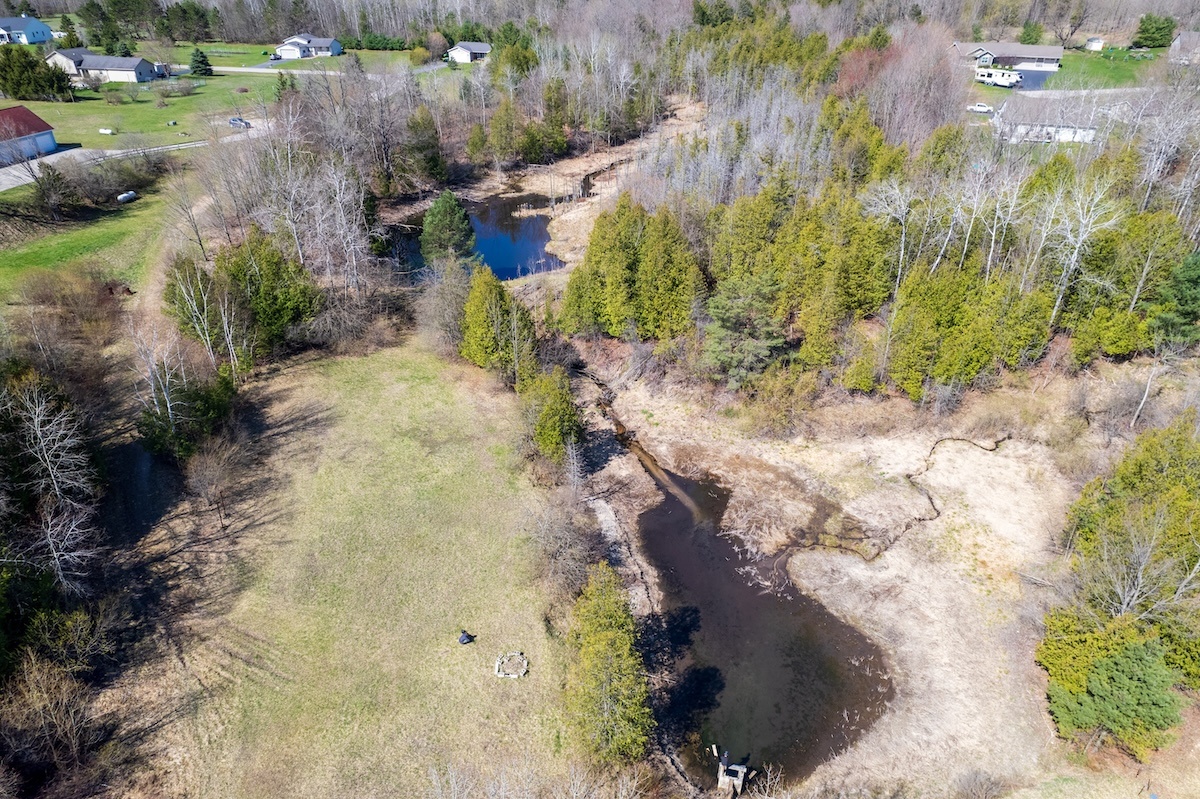
Knoll: Nearly 90 percent of CRA’s 2026 work focuses on restoring rivers and streams. This year, we will replace seven outdated road-stream crossings with structures that restore natural flow and reconnect fish and wildlife habitat in the Manistee, Pine, Cedar, Mitchell Creek, and Jordan River watersheds. We’ll also advance the work to remove eight dams in the Boardman/Ottaway (pictured), Boyne, Rapid, Platte, and Baldwin River watersheds. Together, these projects will restore natural river flow, improve water quality, support fish and wildlife, and strengthen our local communities.
We’re also expanding our woodland habitat improvement work in 2026, including restoring oak–pine barrens in the southern portion of our service area to support threatened and endangered species such as the Eastern Massasauga Rattlesnake and the Karner Blue Butterfly. We are also continuing a regional effort to assess northern hardwood stands heavily impacted by emerald ash borer and will plant trees in targeted areas where recovery is needed. This collaborative work with the Huron-Manistee National Forests, local land conservancies, and Tribal partners is helping inform long-term forest management strategies and has the potential to serve as a statewide model for responding to forest pests and emerging threats.
Express: What legislation are you watching at the state and/or federal level?
Knoll: We’re encouraged by the House’s recent passage of a bipartisan funding package that includes continued investment in Great Lakes programs, including a modest increase for the Great Lakes Restoration Initiative (GLRI) in 2026 and steady funding for water infrastructure and fish and wildlife habitat.
We are closely monitoring the fate of the GLRI beyond 2026, as it’s up for renewal in October 2026. Since 2009, GLRI funding has been foundational to restoration efforts across northern Michigan. While some uncertainties remain, the program has historically enjoyed bipartisan support, and we stay cautiously optimistic about its future.
Express: What changes could have the biggest impact on us here in northern Michigan?
Knoll: Many of the most significant impacts come from cumulative change. Development pressure, aging infrastructure, and land-use decisions—especially those affecting rivers, wetlands, and floodplains—can fundamentally alter how water moves across the landscape. Climate change is amplifying these challenges. More frequent and intense rain events are increasing erosion, flooding, and sediment in rivers, placing added strain on road crossings, dams, and stormwater systems. How we choose to maintain, replace, or remove this infrastructure will shape northern Michigan’s ecological and economic resilience for decades to come.
Express: What can the average citizen do to get involved to help protect our environment?
Knoll: At home, the practices that would make the most difference include maintaining natural vegetation along streams and shorelines, planting native trees and plants, managing stormwater, and reducing nutrient use, all of which help protect water quality and wildlife habitat.
Equally important is staying informed and engaged locally. Local government makes decisions that directly affect our local rivers, wetlands, and green spaces. Showing up, asking questions, and supporting science-based solutions can shape outcomes long before issues reach the state or federal level.
Citizen’s Climate Lobby - Grand Traverse Area Chapter
Formed in 2013, the GTA chapter of the Citizens Climate Lobby is one of hundreds of such chapters around the nation working together to build support for climate action and advocate for effective climate crisis solutions. Elizabeth Dell is the local chapter co-leader and has been with the organization since 2013. The work hasn’t slowed down for 2026 when it comes to clean energy and cleaner money for politicians, so here’s what they’re working on this year:
Express: What are your 1-3 big objectives for 2026 as an organization?
Dell: In the past decade, the U.S. has expanded our electricity transmission infrastructure at a pace of just 1 percent per year. We have to speed that up. On the state and local front, we’re interested in getting Community Solar legislation passed and in supporting clean energy transition work in our communities.
Express: What legislation are you watching at the state and/or federal level?
Dell: Federal permitting reform. We will be watching for Congress to put together a comprehensive package that we hope will include an increase in the grid’s capacity, speeding up the permitting process, and [increasing] certainty and predictability, so that even with changes in administrations, projects that have received approvals will be allowed to proceed.
Express: What changes could have the biggest impact on us here in northern Michigan?
Dell: Getting money out of politics, which is something most voters are in favor of. In the last legislative cycle, more than 80 percent of state legislators accepted campaign donations from energy utilities and other corporations with large state contracts. Meanwhile, Michigan residents have the highest utility rates in our region of the country and have the worst reliability.
There’s a ballot petition circulating that would amend the Michigan Campaign Finance Act by banning regulated utilities and corporations with large state or local government contracts from making political contributions. It also would close the “issue ad loophole” by mandating disclosure of ad spending and modernizing Michigan’s campaign finance disclosure requirements.
Express: What can the average citizen do to get involved to help protect our environment?
Dell: Contact members of Congress and state legislators with specific requests. We want our representatives to support legislation that will help reduce carbon pollution, bring more clean energy online, and build our resiliency to climate change. CCL has action tools that make it easy to do that.
You can also look for opportunities in your local government or school district to encourage reducing carbon pollution. For example, Grand Traverse County is expanding their LaFranier Rd. campus and CCL volunteers have been writing to county commissioners encouraging them to consider how to make the buildings as energy efficient as possible. Finally, talk about clean energy with your family, friends, and colleagues!
Northern Michigan Environmental Action Council
Founded over 45 years ago, this all-volunteer org is the oldest grassroots environmental group in northern Michigan, starting in 1980 over concerns about nuclear power and growing into an organization that works to promote renewable energy, fight sprawl, protect our forests, and decommission Line 5. Board member Rachel Ratliff, who also works full time with the Inland Seas Education Association, gathered her fellow NMEAC board members to come up with these answers to our questions.
Express: What are your 1–3 big objectives for 2026 as an organization?
Ratliff: As a team, we are focused on what feels like unconstrained growth and its impact on our environment here in northern Michigan. However, we are not under the illusion that everything needs to remain the same or even go back in time to someone’s idea of “the good ol’ days.” We at NMEAC want to help preserve those spaces to the benefit of our human and non-human partners as our neighborhoods grow.
A major objective is in confronting the clear and present danger Enbridge’s Line 5 poses to 20 percent of the planet’s fresh surface water. NMEAC supports the anti-Line 5 movement through participation in peaceful public protests, with targeted financial support, and through education to counter Enbridge’s (mis)information.
Express: What changes could have the biggest impact on us here in northern Michigan?
Ratliff: Building new data centers is a hot topic in the state, as they should be! As it stands, many of the proposals for new mega-data centers would cause environmental harm on a grand scale, consume huge volumes of precious fresh water, and run the risk of significant rate increases for our citizens. The demand for energy continues to increase and today’s debate about whether or not to build is rife with misinformation and NIMBY-ism.
There are more sustainable paths forward, and we are interested in fostering dialogue between local government, industry experts, citizens, and other concerned parties to identify shared concerns and potential mitigations. Transparency, strong water protections, guarantees against rate hikes, and responsible use of clean energy can and should be part of the way forward.
Express: What projects are you watching at the state and/or federal level?
Ratliff: Cherry Capital Airport is an incredibly beneficial asset to our region, but its benefits are coming at an ever increasing price for the City of Traverse City, which currently has no seats on the Airport Authority’s board. The airport currently occupies 20 percent of the City of Traverse City’s land area, and the staggering passenger growth of recent years means more noise and emissions from increased frequency of takeoffs and landings, more automobile traffic and associated emissions, more impervious pavement for parking lots and new terminals, and increasing concerns around significant tree removal both within and outside the airports fence line.
NMEAC would like to see more transparency around studies that assess some very concerning issues. What are the limits of the current airport footprint? What are the future costs the people of Traverse City will need to “absorb” to support the seemingly relentless passenger growth? What are the real options for moving some commercial and/or general aviation traffic to other regional airports? And as painful as it might be, what would be the actual trade-offs in environmental, economic, and social costs to develop a new airport elsewhere in the region?
Express: What can the average citizen do to get involved to help protect our environment?
Ratliff: We are interested in increasing public awareness in a way that inspires individual action and we have many education and community events planned including discussions and webinars.


Trending
Summer Hot Spot: Median Sale Price for Area Homes Up 88 Percent Since 2019
Summer has long been the most active season for buying and selling real estate in northern Michigan. So, how was summer 2026… Read More >>
Donating Ahead of Cold Weather
Hard to believe, but winter is not that far away. Jubilee House, Traverse City’s only drop-in day shelter for adults e… Read More >>
TC State Park Reopening in October
Construction work on the Keith J. Charters State Park in Traverse City is wrapping up early, according to the Michigan DNR, … Read More >>