
What Happens When Your Dog Gets Ahold of a Weed Gummy?
Vets and pet owners call on the community to be safer with cannabis products
By Art Bukowski | April 18, 2026
Plenty of people enjoy cannabis, perhaps more than ever now that it’s legal and widely available in Michigan.
But greater accessibility has led to an uptick in dogs or other pets ingesting this psychoactive substance. Local vet offices deal with hundreds of dogs a year that either got into their owner’s stash or ate a gummy (or two) on the trail or beach.
“It truly is a very common toxicity, if not our most common toxicity in the summertime,” says Dr. Karen Seiple, who owns Bay Area Pet Hospital, the region’s only 24/7 emergency veterinarian clinic. “We have multiple cases a day.”
While cannabis poisoning is rarely fatal, it can be very hard on the dog and upsetting for the owner to watch, particularly if they aren’t sure exactly what their pet ate. That’s the case with many owners who seek emergency care.
“The ones where [the owners] know they got into somebody’s bag at the house usually aren’t panicking and calling the vet, even though they probably should,” Seiple says. “The cases we see most commonly are owners who are truly panicked, who think their dog is actively dying, and they have no idea what happened.”
Riley’s Misadventure
Long Lake Township resident Olivia Leyton is one such owner. She and her sister were walking her standard poodle, Riley, at Ransom Lake Natural Area last summer. Not long after the walk, during which Riley was on a leash, he began acting seriously ill.
“Because we didn’t have a single freaking clue what was going on, we just assumed the worst. We really thought he was dying,” she says. “He was stumbling around and couldn’t stand up, his eyes were dilated, his mouth was hanging open. And he has a history of seizures, so that’s what we thought might be happening.”
They took him to the emergency vet, where a urine test showed THC in Riley’s system.
“Our relief was immense when we found out what it was,” Leyton says. “Not that we were happy about it, but we at least [had some answers].”
They still don’t know exactly where Riley ate the drug, though they are almost positive it was on the trail.
“He obviously ingested something, but nobody even saw him do it,” Leyton says. “And [Ransom Lake] was the only place we had gone that day, and it would not have been on our property because nobody here consumes edibles or weed of any kind.”
Riley made a full recovery, but Leyton remains upset and wants people to be less reckless with their cannabis.
“When people are walking on these trails and they’re eating edibles, I’m assuming they just toss down any bits that they didn’t consume, and then it’s going to be right near the trail where a dog can eat it,” she says. And even if they throw it deep in the woods, “it means wild animals are going to get it and they’re going to suffer…people are so mindless, thoughtless, and careless.”
Treatment and Toxicity
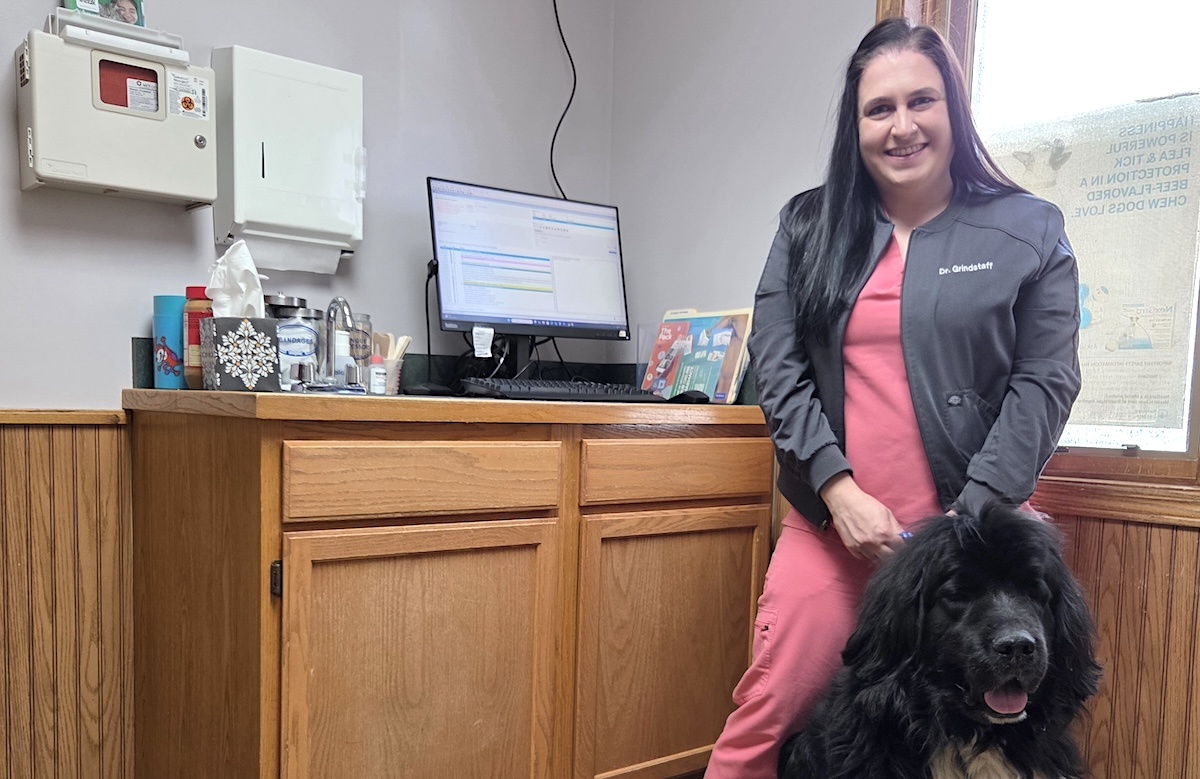
Dr. Jennifer Grindstaff at Long Lake Animal Hospital says her team is no stranger to cannabis toxicity in dogs (the issue is far less common in cats, though it does occur).
Like Seiple, Grindstaff says many people come in having no clue what their dog ate, though the legalization of cannabis has made people who do know far more willing to admit it. This clarifies and speeds up the treatment process by letting the medical staff know exactly what they’re dealing with.
“At least with it being legal, people are more willing to admit it,” Grindstaff says. “What we used to have to tell people is that we’re not judging, we’re not going to report you, we just want to help your pet.”
While it’s not usually fatal, ingesting cannabis can have serious side effects that require medical attention, Grindstaff says, especially when consumed in large quantities.
“The higher amounts are much more dangerous because when you see that, you can see seizures and that kind of stuff. And it affects their blood pressure and their heart rate, even with smaller doses, which is when it gets a little bit scary,” she says. “So if owners know they got into it or have a suspicion, we always tell them to bring them in.”
Treatment usually involves fluids and time, though severe cases involve more intervention.
“In those types of cases where we can’t get them to vomit, we give them activated charcoal. Activated charcoal will bind to the toxin, and then we hook them up on the IV to help the body flush that through,” Grindstaff says. “Then while they’re here, of course we’re monitoring their heart rate, their oxygen saturation, their blood pressure.”
(Side note: Never try to induce vomiting in your pet at home, vets say, as it carries considerable risk of complications)
Sobering Up
In some cases, the pets can head some relatively soon after being checked out at the hospital.
“We check their vitals, and as long as their heart rate and their temperature are in a safe place, and we know that marijuana exposure is probable, it’s reasonable to keep those pets in a quiet, safe room at home and let them sober up,” Seiple says.
Grindstaff has seen enough dogs getting into random weed to share Leyton’s frustrations about people who are careless with it.
“I wish people would just take care of their stuff and not discard it in the woods,” she says. “And if you have your pet out, be aware of what your pet is doing, don’t let your pet get too far away from you…make sure you have your eyes on them and you can see what they’re doing at all times.”
Seiple echoes those sentiments.
“Especially with walks on the beach or in areas where people have had campfires, or where there’s been obvious signs of socialization, it’s unfortunately reasonably likely that [dogs] might find remnants of weed to get into,” she says. “I think letting your dog run free on the beach is a great thing in appropriate areas, but it’s a risk. This is something that is commonly left behind and is likely to cause symptoms.”


Trending

Summer Hot Spot: Median Sale Price for Area Homes Up 88 Percent Since 2019
Summer has long been the most active season for buying and selling real estate in northern Michigan. So, how was summer 2026… Read More >>
Donating Ahead of Cold Weather
Hard to believe, but winter is not that far away. Jubilee House, Traverse City’s only drop-in day shelter for adults e… Read More >>
TC State Park Reopening in October
Construction work on the Keith J. Charters State Park in Traverse City is wrapping up early, according to the Michigan DNR, … Read More >>