Great White Faces the Fire
Oct. 8, 2003
‘At times it just seems like a dream -- that it didn‘thappen. But then reality clicks in and stares you right in the face.‘
A friend recently asked me how I go about deciding on the articles that I
write. For the Express I submit story ideas and try to balance between national touring acts and local musicians. My friend further inquired as to what I was working on next.
When I responded “Great White,“ he became angry and said, “After the
disaster in Rhode Island how could you give any editorial credence to that
band?“
Had the tragic nightclub fire not happened I would have written a piece
about Great White. Their musical credentials warrant coverage, and when a
band that has sold millions of records visits Northern Michigan, I try to
write a piece about them.
So why change my approach now?
Certainly after the disaster there was an immediate need to place blame. The
band has had their share of fingers pointed at them, although several newspapers have written pieces claiming that the venue, not the band, erred in judgment.
There is now evidence that the band did disclose to the venue that they
would be using pyrotechnics. At previous stops on the tour, some venues requested via contract the band not use pyrotechnics and they didn‘t. The nightclub had been
written up for several safety violations and refused to make changes
that made two exit doors not accessible. In addition, the nightclub owners
coated the interior with 1-1/2 inches of flammable foam to help with
soundproofing the building because of complaints from neighbors. Evidence
also shows that the lead singer Jack Russell tried to get a fire
extinguisher that was supposed to be by the stage, but had been put into a
closet by the nightclub‘s management.
KIDS WITHOUT PARENTS
Regardless of who is to blame, 100 people died that night and 56 kids are now
without one or both parents as a result of the fire. But instead of
climbing into a cave and hiding, Jack Russell, the founder and lead singer of
Great White and his fellow bandmates sought out a way to help those who
suffered deeply from that night.
It is important to remember that the band lost their guitar player Ty
Longley to the fire. Longley, 32, was expecting the arrival of his first
child (his son Acey was recently born). Ty was a bright, young, talented,
up-and-coming guitarist who had a big future. Information on Ty is available at www.tylongley.org, a website set up by his family to raise funds
for his son.
In preparing for the interview I knew little about Russell or the
band. I had seen the band under a different name in the early ‘80s
as a Led Zeppelin cover act (to this day they are the best Led Zeppelin
tribute band I have seen), and then a few years later when they were an opening act for Night Ranger, but besides a few passing moments backstage, I had never interviewed the band.
In my stereotypical view, unlike their 1960‘s counterparts who were often educated and articulate, a lot of the metal hair bands from the ‘80s, while musically talented, are often intellectually challenged. Thirty seconds into my interview, Jack Russell quickly changed all of that.
Having interviewed hundreds of rock stars, I found that Russell was
not only articulate, but spoke with conviction, insight and sincerity. In the “all about me“ generation of musicians and record company executives, Russell was a refreshing change.
Russell and Great White have embarked on a 41-city tour to raise funds for
the Station Family Fund, set up by survivors and victims‘ families to help
those in need.
LOST FRIENDS
“This is not about Great White,“ said Russell. “Sure there are those
pointing to us being self-serving and that we are doing this for publicity
for the band. They are wrong and sick. We lost a band mate, three very close
friends, and a lot of fans that we consider to be our friends. These people
are not ticket stubs to us, we have built relationships with our fans over
the years and when we look out into the crowd we see a lot of familiar
faces.“
Russell is adamant about the group helping out, and 100 percent of Great White‘s profits go directly to the fund via promoters, along with 100 percent of proceeds from a memorial t-shirt and 10% of promoter and artist‘s merchandise.
“When we as a band spoke of doing something we spoke to several agencies
that wanted to take administrative fees up to 50 percent, and we kept saying, ‘Well,
what about the kids without parents, who need school clothes and others who
need money for medical expenses? How can you even think about taking away
any funds from them?‘“ said Russell. “Then the Station Family Fund came to
us. (Its) administration fees are from a separate fund and 100 percent of the money
raised goes to those in need. This fund was established by the victims
families and survivors from that night.“
To date the fund has raised $100,000 and Russell and the band plan to
continue as long as necessary.
“We will be adding more dates and of course we are going to help in any way
that we can. These people need help and we need to assist
them. This is not a rock and roll tragedy, rather a human tragedy. We are
grateful and the Fund is grateful for all who have contributed, but there is
more work to be done.“
Russell knows that the group can‘t tour forever in support of the fund.
They are scarifying personal paychecks. They have cut out every possible
expense for the tour, including trading their tour bus for a van. They
realize that their sacrifices pale in comparison to the many victims‘
families.
“This is a tough time for all involved and we are very pleased with the
response from our fans and others to help their fellow fans,“ said Russell.
“There has been a tremendous amount of support from a lot of people. There
needs to be more and we will do our part but others are needed.“
LOOKING AHEAD
As for the future of the band Russell doesn‘t want to speculate.
“As I said before, this isn‘t about us, so my focus is all about helping those
most affected by this. I have shied away from discussions about the band,
its past or future,“ said Russell. “For us it is day-to-day, I go through
these reality checks. At times it just seems like a dream -- that it didn‘t
happen. But then reality clicks in and stares you right in the face. You
realize that there is a lot more out there to life and the cynical view I
have developed as being a part of this business is going away. I have seen
so many acts of kindness; my faith in humanity has been restored as a result
of watching so many give of their time and financial resources.“
Possible litigation has put Russell and others involved that night in a
silent mode for fear that their words might be used against them in some
future court case. Russell also wants to be respectful of the families hurt
by the fire, so he chooses his words and actions carefully.
“At this point we have decided not tour near that part of New England, and
friends from other bands have come forward a played benefits. When the time is right we return to the area.“
A few of the victims‘ families have opposed Great White touring to raise
money and have sent letters to promoters and venues asking that Great White
shows be cancelled.
“I understand their anger and frustration, it may not be on the same level,
but I grieve with them at their loss,“ said Russell. “But I feel if they don‘t want to accept help from a band that is fine, but don‘t stop those who
have come for us for help from getting the help they need. As long as people
come to us we are going to help them in whatever way we can.“
To date, several family members and some survivors have gone out to
Great White shows in support of the band. Many shows have included
additional fundraisers within the show, including fire departments passing
around a boot.
While the proceeds of the concert will go to the Family Station Fund, there
is still a show to perform. Great White will bring their 20-year history of performing chart-toppers like “Once Bitten Twice Shy,“ “Rock Me,“ and “Face the Day“ to the stage plus a lot more. The Led Zeppelin, Who and blues-influenced California
rockers hit the scene in the mid-‘80s and enjoyed success playing major
venues. Today their bluesy-melodic metal sound continues to resonate with
fans young and old alike and Russell assures 110 percent intensity by the band
when they hit the stage.
“After the first song we ask for 100 seconds of silence for the 100 victims,
and at every venue it has been completely quiet for the whole time,“ said
Russell. “I would like to say even if you are not a fan of the band and don‘t
agree with what we are doing, you can still make a difference by making a
contribution to the Station Family Fund.“
For info or advance tickets visit www.streetersonline.com or call Streeters at (231) 932-1300. Doors open at 8 p.m. for the Friday, Oct. 10 show, and WKLT Northern Michigan Rocks CD contributor Wilson/Knowland will take the stage around 9 p.m.
Writer Rick Coates will be donating his article fee to the Family Station Fund and is encouraging others to contribute one day‘s wage. A collection box will be at the show and checks should be made payable to the Family Station Fund. Checks may also be sent to: Station Family Fund, 300 Quaker Lane, P.O. Box 214, Warwick, RI 02886 or see: www.stationfamilyfund.org

Trending
Summer Hot Spot: Median Sale Price for Area Homes Up 88 Percent Since 2019
Summer has long been the most active season for buying and selling real estate in northern Michigan. So, how was summer 2026… Read More >>
Donating Ahead of Cold Weather
Hard to believe, but winter is not that far away. Jubilee House, Traverse City’s only drop-in day shelter for adults e… Read More >>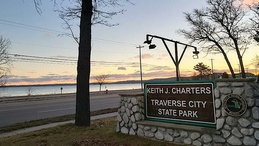
TC State Park Reopening in October
Construction work on the Keith J. Charters State Park in Traverse City is wrapping up early, according to the Michigan DNR, … Read More >>