
Letters 1
Dec. 7, 2005
No right to commit wrongThe U.S. House of Representatives now assumes that the freedom to destroy critical ecological habitat is a landowner’s “property right.”
It is really a “property wrong.”
An amendment to the Endangered Species Act recently approved by the House would authorize government payments to polluters to not destroy a “critical habitat.” The bill, submitted by Rep. Richard Pombo, R-Calif., passed by a 229-193 margin.
Should this amendment pass the Senate and become law, it would set a dangerous precedent by compensating property owners for ordinary acts of civility.
Human pressures find expression in subtle, but profound, ways. As human habitats expand and compress upon available lands, other forms of life are constrained to yield. When a species teeters on the brink of extinction, the Endangered Species Act rescues the vanishing victim. This law has served as the safety net for America’s wildlife since 1973. It became law in 1973 under Nixon, a conservative president, to conserve tenuous threads in our web of life.
Should land speculators be entitled to payment when asked to not destroy the home of life’s last vestige? Does anyone have the right to fully exterminate nature’s finale in their backyard? Is this a constitutional right? Have we reached a dizzying height on the food chain? Do we occupy a pinnacle endowed with the inalienable right to render lesser species extinct? Do polluters have a “property right” to nudge endangered life over the edge?
Maybe the House of Representatives needs a refresher course on how the carbon cycle functions.
We remain perilously embedded in a fragile and tenuous web of life. Life, as we know it, cannot exist in isolation. All life relies upon the web of life. Humans are not exempt. Our food, air, and water depend upon natural biological systems.
Do any of us, individually, have the right to inflict harm by snuffing out a link in life’s chain?
Either everyone has a responsibility to the community of life, or no one does.
Launching down the path of paying each other to act responsibly sets a dangerous precedent. It’s not a matter of where the process begins, but rather where it ends.
What other acts of human kindness, compassion, and responsibility merit reimbursement from the public treasury? If we are to pay citizens for not extinguishing a fragile species, then why not pay prospective poachers for random acts of lawful conservation during the off-season?
Every land regulation and every zoning ordinance affects the value of land. For example, a one acre residential parcel would be worth billions as a nuclear dump site. The loss of value to anyone’s homestead under this nuclear prohibition would be enormous. Where should that bill be submitted?
Our perception of harm fluctuates with the times and with changing social norms. Oleo margarine and beer were once considered contraband. Meanwhile, Coca-Cola was lawfully made with cocaine. Today, we know that human activity affects more than meets the eye.
The cumulative effect of 6.5 billion people impacts every aspect of our being, every minute of every day. In 1950, 150 million people inhabited the United States. We have now become home to almost 300 million. The risk of habitat destruction has become more tangible over the decades.
Hopefully, civility in our system has matured beyond the primordial stage of believing that homo sapiens can live in arrogant isolation as an island.
There is a fundamental flaw in this House bill. It either admits an open season on endangered species or it grants an open season on the public trough. Either way, the public loses.
Endangered species serve as reminders of our awkward weight on the planet. Their destiny is in our hands. There is no “property right” to commit a “property wrong.”
John F. Rohe • Petoskey
Dave Camp‘s payday
“Rubber Stamp“ Dave Camp‘s at it again. He has abandoned the principles of his moderate Republican constituency and also left the conservatives twisting in the wind while looking out for his own self-interests.
Congressman Camp has consistently voted against working families. The minimum wage has not been raised since 1997 and has stagnated at $5.15 an hour. While he will not support a raise for working families, he has actively supported raises for himself totaling up to $31,600 during that same period. He won‘t vote to raise the minimum wage.
He won‘t support Food Stamps. He won‘t support children‘s health programs, but he will give himself a $31,600 raise in an already more than adequate salary.
Congressman Camp can‘t seem to fiscally restrain himself except when it comes to cutting programs that help the poorest of the poor. It‘s time we had Mike Huckleberry representing us in the 4th District.
Thomas Ford • Owosso

Trending
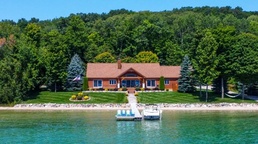
Summer Hot Spot: Median Sale Price for Area Homes Up 88 Percent Since 2019
Summer has long been the most active season for buying and selling real estate in northern Michigan. So, how was summer 2026… Read More >>
Donating Ahead of Cold Weather
Hard to believe, but winter is not that far away. Jubilee House, Traverse City’s only drop-in day shelter for adults e… Read More >>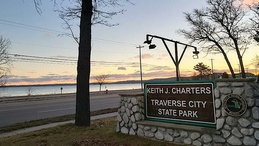
TC State Park Reopening in October
Construction work on the Keith J. Charters State Park in Traverse City is wrapping up early, according to the Michigan DNR, … Read More >>