
Killing the Death Penalty
Spectator
By Stephen Tuttle | Oct. 24, 2026
It was going to be quite the spectacle, our first public execution since 500 or so watched a public hanging in Galena, Missouri, in 1937. A few months earlier, nearly 20,000 people had gathered, apparently in a festive mood, to watch another man hanged in Owensboro, Kentucky. After the Missouri barbarism, public executions were outlawed.
But our firing squad execution of the man who killed 13 and injured many more in a mass shooting event at Fort Hood in Texas could have been live streamed and watched by millions. It would have made us just like the other countries with public execution spectacles like North Korea, Saudi Arabia, and so many other forward-thinking regimes. President Trump, however, was a bit concerned about the image of a man confined to a wheelchair—he was paralyzed in a shootout during his murderous rampage—being shot while seated. So, instead, we’ll kill him more privately.
The president would have been better served to advocate for doing away with the death penalty altogether. With mandatory appeals, delays, and separate prison death row sections, death sentences can be two and a half to five times more expensive than even life sentences, according to the Death Penalty Information Center (DPIC).
It’s not only expensive, but carrying out the deed has become more than marginally problematic. Christa Pike is the only woman on Tennessee’s death row. She committed heinous acts, including murder, when she was younger and has not been a model prisoner. She was scheduled to be executed by lethal injection on Sept. 30. She was not scheduled to be tortured, but it worked out that way. They had a very hard time finding usable veins, actually injected her twice, and managed to put her into a coma but not kill her. Officials successfully fought to save her so they could grotesquely try to execute her again.
Additionally, there is no scientific or empirical evidence capital punishment deters any crime, including murder. If it did, our states with the death penalty would necessarily have the lowest murder rates. Yet the five states with the highest per capita murder rates—Mississippi, Louisiana, New Mexico, Alabama, Tennessee—all have capital punishment. Of the states with the lowest murder rate—New Hampshire, Hawai’i, Idaho, Rhode Island, Vermont—only Idaho still has capital punishment.
Texas has killed more than 400 individuals this century, and Florida has executed 33 since the start of 2025, but neither state’s lethal injections have much slowed their homicide rate. Neither state has executed its way to safety.
To our everlasting credit, Michigan is the only state to ban capital punishment in its state constitution.
Though conviction rates vary from state to state, capital murder cases result in convictions more than 70 percent of the time, but actual death sentences are handed down less often, as last-minute plea bargains often remove death from the possible consequences, and sometimes jurors would rather sentence someone to life in prison.
Cost, incompetent application, and lack of deterrence are just part of the problem. Perhaps the best reason of all to reconsider the death penalty is that sometimes law enforcement, the courts, juries, and even witnesses get it wrong.
According to the DPIC, 203 death row prisoners have now been exonerated. Some were found not guilty after a retrial, some had their verdicts overturned by appellate courts, some were given a full pardon based on objective new evidence like DNA or fingerprints, and some were released because of serious law enforcement or prosecutorial misconduct.
Not all were innocent, but none should have been on death row. Then it gets worse. There are cases we now know in which innocent people were, in fact, wrongly executed. Here are two glaring examples, though there are more.
Cameron Todd Willingham was executed in Texas in 2004 for setting a fire that killed his three children. The “arson science” that convicted him was flawed to the point of being nonsensical. Modern, accurate science proved the fire started accidentally, as Willingham had always claimed, not as the result of arson.
Carlos DeLuna was executed in Texas in 1989 having been convicted of a convenience store robbery and murder. But he was misidentified and the courts never acknowledged the mistake. The actual culprit was eventually found but too late for Carlos.
State sponsored killing in the form of capital punishment accomplishes almost nothing. There is no evidence it makes us safer or deters the next murder, it is brutally expensive, and it risks killing innocent people. It is easy to understand the pain and rage of the families and friends of murder victims. But the most vengeful instincts of our most deeply wounded citizens do not a solid foundation for justice make. It is not time to return to public executions; it is time to eliminate executions altogether.


Trending

Halloween on the Farm with Wilderness Valley
Don your Halloween costume and take advantage of Wilderness Valley Farms’ final Saturday of the season, Oct. 31, from … Read More >>
Share Your Favorite Michigan Mysteries
We’ve been diving into all kinds of spooky stories this week, and that got us thinking about our 2027 Histories & … Read More >>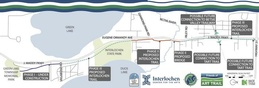
Interlochen’s Community Art Trail Underway
This fall, Interlochen began work on the Interlochen Community Art Trail, a 3.5-mile “non-motorized trail connecting p… Read More >>